 admin
admin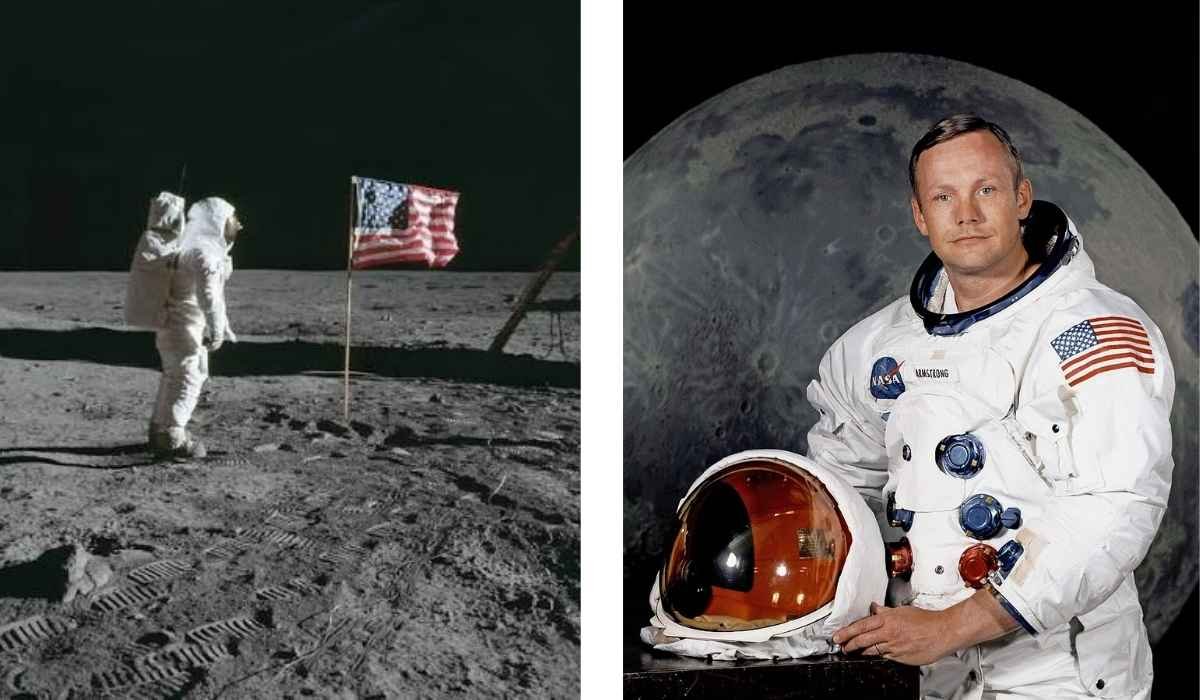
Born on August 5, 1930, in Wapakoneta, Ohio, young Neil Armstrong developed an early and intense fascination with aviation that shaped his entire destiny. His parents supported his curiosity, and he experienced his very first airplane ride at a young age in a Ford Tri-Motor. By the time he was a teenager, he was already building model airplanes and reading everything he could find about aeronautical science. This deep passion laid a solid foundation for a remarkable future filled with groundbreaking achievements. Long before entering the history books, he was simply a dedicated kid with a dream of flying high above the clouds.
Quick Bio
| Attribute | Details |
| Full Name | Neil Alden Armstrong |
| Birth Date | August 5, 1930 |
| Birthplace | Wapakoneta, Ohio, USA |
| Profession | Astronaut, Aeronautical Engineer, Test Pilot, Professor |
| Famous Mission | Apollo 11 (First Moon Landing) |
| Key Legacy | First human to walk on the Moon |
Early Childhood and Aviation Beginnings
Growing up in the American Midwest during the Great Depression, the young boy found solace and excitement in the expanding world of flight. His hometown provided a quiet backdrop where he could observe passing aircraft and dream about soaring into the stratosphere. He spent countless hours reading aviation magazines and constructing detailed miniature models of contemporary airplanes. These formative experiences nurtured a natural aptitude for mechanical concepts and problem-solving. Every new model he built brought him one step closer to understanding the complex physics of aerodynamics. Little did anyone know that these simple childhood hobbies would eventually lead him straight into the history books as Neil Armstrong.
Earning a Pilot License Before a Driver License
A major milestone in his youth occurred when he achieved a remarkable aviation feat prior to reaching adulthood. On his sixteenth birthday, he successfully earned his student pilot license, accomplishing this goal even before he legally obtained a state driver license. This achievement required immense dedication, countless hours of studying ground school materials, and practical flight instruction at a local airfield. His flight instructor quickly noticed his exceptional spatial awareness, calm temperament, and natural coordination behind the controls. Mastering an aircraft at such a tender age proved that he possessed extraordinary raw talent for aviation. This early taste of freedom in the open skies cemented Neil Armstrong on a lifelong path toward aerospace excellence.
Higher Education at Purdue University
Following his graduation from high school, he secured a prestigious U.S. Navy scholarship that funded his higher education aspirations. He enrolled at Purdue University to study rigorous aeronautical engineering, diving deep into advanced mathematics and physics. His college studies were temporarily interrupted by military obligations, but he ultimately returned to complete his bachelor degree with flying colors. The academic environment at Purdue challenged him intellectually and exposed him to brilliant minds who shared his passion for flight. He absorbed complex engineering principles that proved invaluable during his future spacecraft design and testing phases. This strong academic foundation prepared Neil Armstrong for the intense technical demands of the emerging space race.
Military Service During the Korean War
Answering the call of duty for his country, he transitioned from university halls into active military service as a naval aviator. During the intense conflict of the Korean War, he flew seventy-eight combat missions in fierce aerial engagements. Operating Grumman F9F Panther jet fighters from aircraft carriers required nerves of steel and split-second tactical decision-making. On one occasion, his jet suffered heavy damage from enemy fire, yet he managed to steer the crippled aircraft back to friendly territory before ejecting safely. These harrowing wartime experiences forged an unbreakable inner resilience and exceptional grace under pressure. Such battlefield trials transformed Neil Armstrong into a battle-tested pilot capable of handling extreme crisis situations.
Transitioning to Experimental Test Pilot Work
After completing his military service obligations, he pursued a career pushing the absolute boundaries of flight technology as a civilian test pilot. He joined the National Advisory Committee for Aeronautics, which later evolved into the modern space agency known globally. Operating out of high-speed flight research stations, he tested cutting-edge experimental aircraft designed to fly faster and higher than ever before. His analytical engineering mind allowed him to collaborate effectively with designers to fix severe aerodynamic flaws in prototype jets. Every test flight carried immense risk, yet he approached each mission with meticulous calculation and preparation. This dangerous yet vital work established Neil Armstrong as a premier test pilot of his generation.
Conquering the Skies in the X-15 Rocket Plane
Pushing the envelope further, he became one of an elite group of aviators chosen to fly the legendary North American X-15 rocket-powered aircraft. This incredible machine was built to pierce the upper edges of the atmosphere and endure scorching thermal temperatures at hypersonic speeds. During multiple flights, he successfully navigated the rocket plane to staggering altitudes and velocities, gathering crucial scientific data for space flight. Controlling the X-15 demanded absolute precision because a single miscalculation could result in catastrophic structural failure or loss of control. His brilliant execution of these perilous flights demonstrated his readiness for orbital exploration. Through these daring ventures, Neil Armstrong proved he could conquer the most challenging aerospace vehicles ever created.
Selection Into the NASA Astronaut Corps
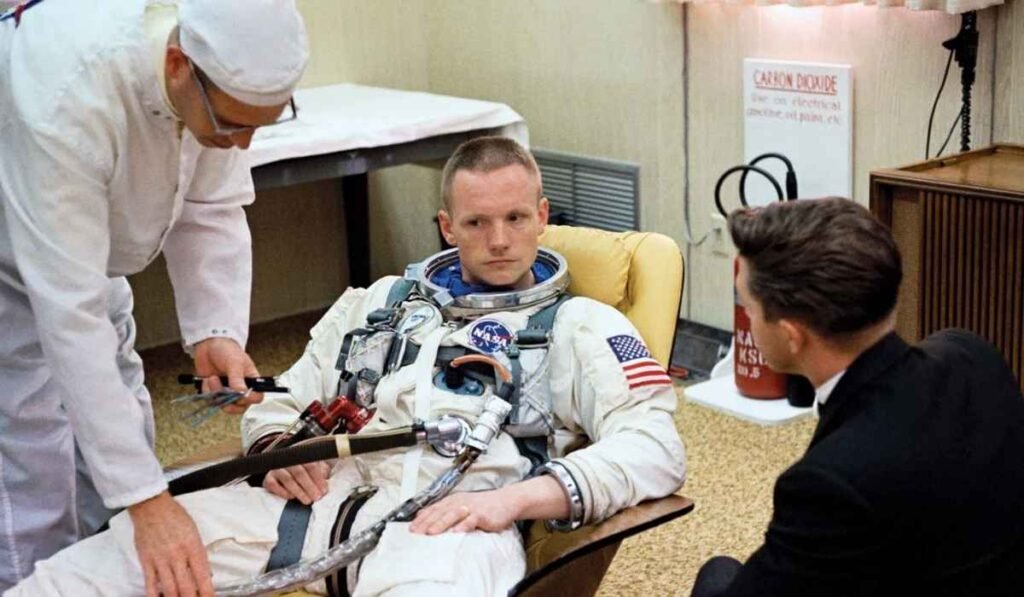
Recognizing his unique blend of engineering brilliance and exceptional flying skill, the space agency selected him for astronaut training. He moved his young family to Texas to join the second wave of space explorers tasked with turning orbital dreams into reality. The training regimen was physically and mentally exhausting, pushing candidates through intense survival courses, simulator sessions, and theoretical studies. Despite the high-pressure environment, his characteristic calmness and quiet leadership earned the deep respect of his fellow trainees. He treated every simulation with utmost seriousness, viewing preparation as the ultimate key to survival in the vacuum of space. This rigorous selection process positioned Neil Armstrong at the very forefront of human exploration.
Commanding the Historic Gemini VIII Mission
His first major orbital test came when he served as the command pilot for the Gemini VIII space mission alongside pilot David Scott. During this flight, he successfully achieved the world’s first successful docking maneuver between two spacecraft in Earth orbit. Shortly after docking, a malfunctioning thruster caused the combined spacecraft to spin violently out of control, threatening the lives of the crew. Displaying lightning-fast reflexes and icy composure, he deactivated the faulty thruster system and activated emergency reentry controls to stabilize the ship. This quick-thinking intervention saved both astronauts from certain death and earned international praise. Such remarkable crisis management solidified the reputation of Neil Armstrong as a consummate professional.
Preparing for the Ultimate Lunar Journey
Following the success of the Gemini program, planning immediately intensified for the monumental goal of landing humans on the Moon. He was assigned as the spacecraft commander for the legendary Apollo 11 mission, bearing the immense weight of a national promise. Countless hours were spent practicing lunar module landings in specialized simulators that replicated the unfamiliar terrain of our natural satellite. Every potential mechanical failure, navigation error, and communication glitch was analyzed and rehearsed down to the smallest detail. The entire world watched with bated breath as the launch date drew closer, knowing history was about to be made. In this pivotal leadership role, Neil Armstrong carried the hopes and dreams of millions of people on his shoulders.
Launching Toward the Heavens on Apollo 11
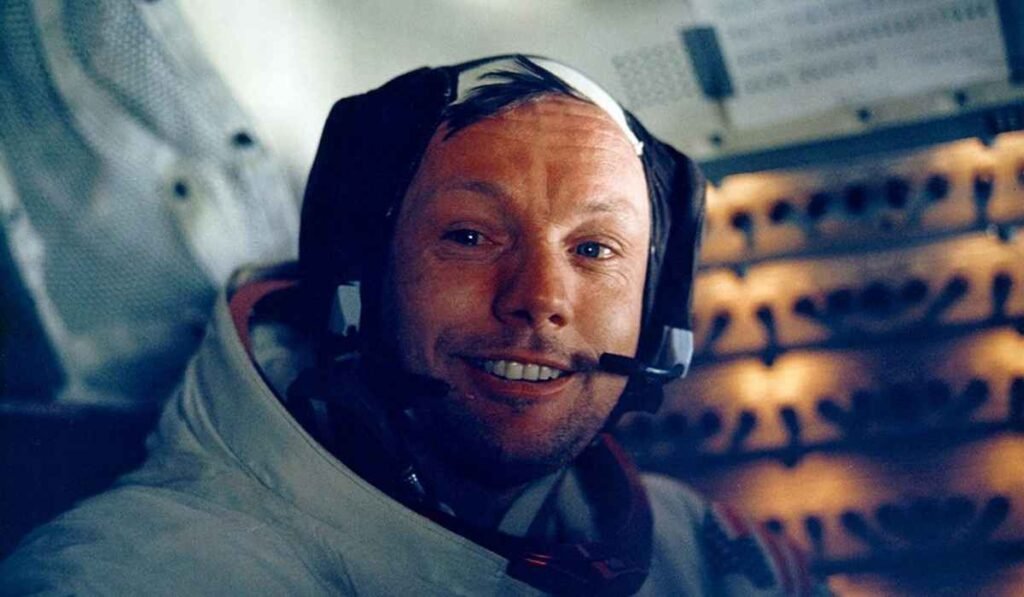
On a warm summer morning, a massive Saturn V rocket roared to life, propelling the Apollo 11 crew away from Earth and toward the cosmos. Inside the cramped command module, he maintained steady control alongside fellow astronauts Buzz Aldrin and Michael Collins. The journey across hundreds of thousands of miles of empty space required absolute precision in navigation and trajectory management. Millions of television viewers around the globe glued their eyes to glowing screens to follow every update of the voyage. The sheer engineering triumph of reaching lunar orbit marked a defining moment in human history. Through steady guidance and unwavering focus, Neil Armstrong steered his crew safely toward the threshold of another world.
Piloting the Eagle Module to the Lunar Surface
The most tense phase of the mission arrived when he and Buzz Aldrin transferred into the lunar module named Eagle to begin their descent. As they approached the designated landing site, automated computer guidance systems steered the craft toward a dangerous boulder-strewn crater. Recognizing the grave hazard, he took manual control of the spacecraft, expertly flying past the boulders to find a smooth, safe patch of ground. Fuel reserves dwindled dangerously close to empty while millions watched anxiously back on Earth, praying for a successful touchdown. With mere seconds of fuel remaining, the Eagle settled gently into the dusty soil of the Sea of Tranquility. This breathtaking display of piloting skill brought Neil Armstrong eternal fame.
Taking One Giant Leap for All Mankind
Hours after touching down, the hatch swung open, and he slowly descended the ladder to make his historic descent onto the alien landscape. Pausing on the footpad, he placed his boot onto the powdery surface and spoke words that would echo across generations forever. Millions listened intently as he declared that his action was one small step for a man and one giant leap for mankind. This poetic statement captured the magnitude of the scientific milestone achieved through decades of collective human effort. Cameras broadcast the grainy black-and-white footage globally, uniting humanity in a shared moment of wonder and pride. In that immortal second, Neil Armstrong became a universal symbol of human curiosity and courage.
Conducting Scientific Exploration on the Moon
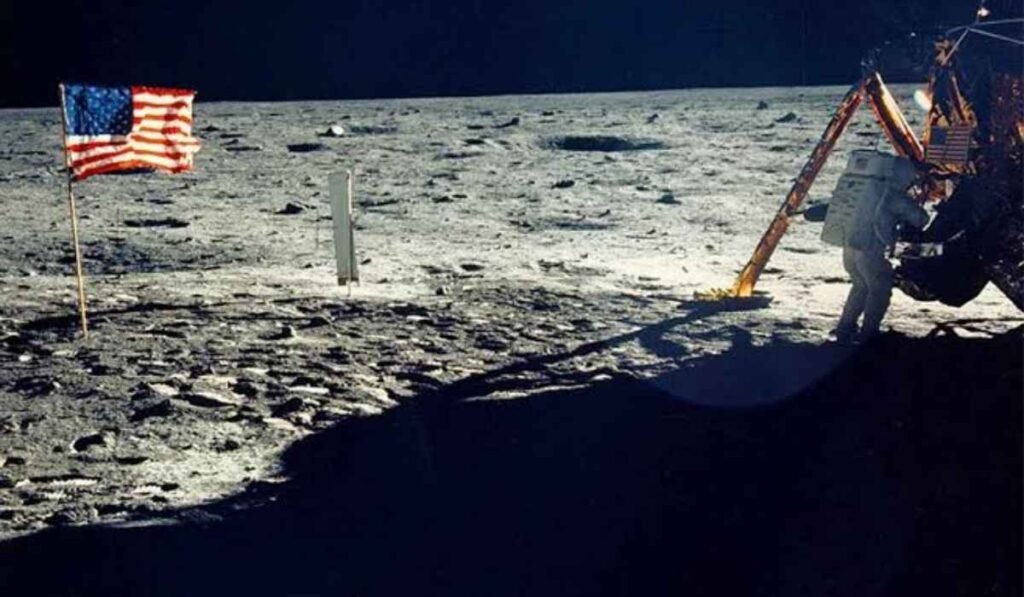
Once outside the lunar module, he and his fellow astronaut wasted no time setting up scientific instruments and collecting soil samples. They planted an American flag, captured panoramic photographs of the desolate horizon, and gathered precious rocks to bring back for laboratory analysis. Working in low gravity required a specialized rhythm of movement to maintain balance while carrying heavy life-support backpacks. Despite the immense scientific importance of their tasks, they maintained strict efficiency to ensure the safety of the expedition. Every rock sample collected provided geologists with vital clues regarding the origins of our solar system. Through diligent fieldwork on the lunar surface, Neil Armstrong expanded the scientific horizons of our entire species.
Returning Safely Home to Planet Earth
Having completed their surface objectives, the lunar module ascent engine fired successfully, lifting them back up to dock with the command module. Reunited with their orbiting colleague, they began the long return journey across the void of space toward their home planet. Their capsule streaked through the atmosphere at blistering speeds, protected by specialized heat shields that glowed fiercely in the plasma friction. Parachutes deployed successfully, allowing the spacecraft to splash down safely into the Pacific Ocean, where rescue teams awaited them. Heroes welcomed them back with thunderous applause, parades, and international celebrations honoring their unprecedented accomplishment. The successful recovery marked the triumphant conclusion of the voyage led by Neil Armstrong.
Transitioning to Academia and Inspiring Students
Following his retirement from active space missions, he chose a quieter path focused on education and sharing his vast knowledge with younger generations. He accepted a faculty position as a professor of aerospace engineering at the University of Cincinnati, teaching students the principles of flight. Students found him to be a humble and dedicated educator who valued rigorous academic discipline over celebrity status. He encouraged aspiring engineers to pursue innovation with integrity, cautioning them that precision matters deeply when human lives depend on technology. This academic chapter allowed him to shape the minds of future aviation leaders. Through teaching, Neil Armstrong continued to serve society long after leaving the cosmos.
Maintaining Humility Amidst Global Stardom
Despite receiving countless medals, honors, and international acclaim, he consistently avoided the trap of personal vanity or commercial exploitation. He preferred a quiet, private life, shying away from constant media attention and politely declining requests to monetize his famous status. When praised for his monumental accomplishments, he always redirected credit toward the thousands of engineers, technicians, and scientists who made the mission possible. This steadfast modesty endeared him even further to the public, establishing him as a true gentleman of remarkable character. He understood the heavy symbolism of his flight while remaining grounded in his personal values. Throughout his life, Neil Armstrong modeled the finest attributes of quiet American heroism.
Later Professional Endeavors and Corporate Leadership
Beyond his university teaching career, he lent his sharp analytical mind to various corporate boards and aviation safety committees. He served as chairman for several technology and aviation companies, helping guide strategic advancements in modern aerospace engineering. His expert opinions remained highly sought after by government agencies investigating major aviation incidents, including the space shuttle disaster inquiry. He approached these advisory roles with the same meticulous attention to detail that defined his days as an experimental test pilot. Industry leaders deeply respected his pragmatic insights and unwavering commitment to engineering safety standards. In these diverse capacities, Neil Armstrong quietly steered the future direction of flight technology.
Passing and Enduring Legacy in Human History
He passed away on August 25, 2012, following complications from cardiovascular surgery, prompting global expressions of profound grief and admiration. Leaders from every corner of the earth paid tribute to his monumental contributions to science, exploration, and the human spirit. Memorial services celebrated a life defined by courage, intellect, and an absolute dedication to pushing the boundaries of what is possible. Educational institutions and space organizations established scholarships and awards in his honor to inspire future generations of innovators. His name remains eternally etched in the stars as a beacon of human achievement. The extraordinary legacy of Neil Armstrong will continue to guide humanity toward new frontiers for centuries to come.
Frequently Asked Questions
- When was Neil Armstrong born?
- Neil Armstrong was born on August 5, 1930.
- What mission did Neil Armstrong command?
- He commanded the historic Apollo 11 lunar landing mission.
- What famous words did he say on the Moon?
- He stated that it was one small step for man and one giant leap for mankind.
- Did he serve in the military?
- Yes, he served as a U.S. Navy aviator and flew combat missions during the Korean War.
- What did he do after retiring from NASA?
- He worked as an aerospace engineering professor at the University of Cincinnati.