 admin
admin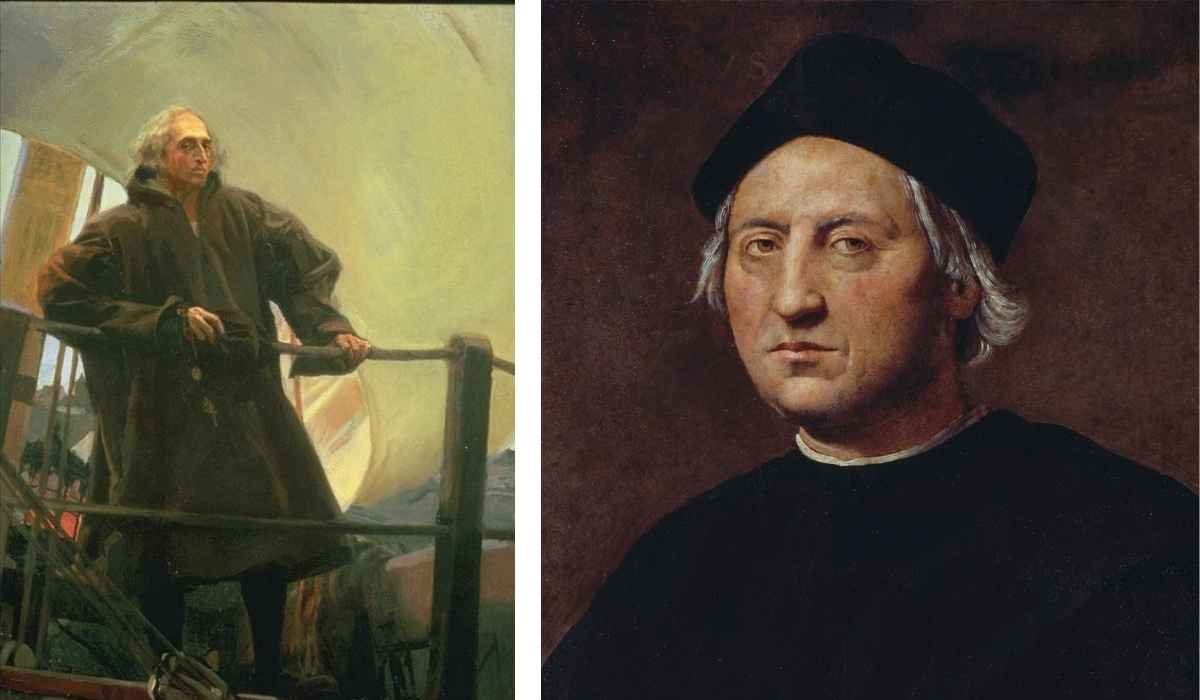
Long ago, brave navigators dreamed of charting unknown waters to discover faster commercial routes across vast oceans. Among these ambitious sailors was Christopher Columbus, an Italian explorer whose historic voyages fundamentally transformed global geography and human history. Driven by an unyielding passion for discovery, he sought royal patronage to prove that sailing westward could connect Europe directly with the riches of Asia. His persistent lobbying eventually convinced the Spanish monarchs to sponsor a daring expedition that would change the world forever. Today, his complex legacy continues to fascinate historians and students alike across the globe.
Quick Bio Overview
| Attribute | Detail |
| Name | Christopher Columbus |
| Birth Year | 1451 |
| Birthplace | Genoa, Italy |
| Key Profession | Explorer and Navigator |
| Notable Achievement | Transatlantic Voyages to the Americas |
Early Life and Maritime Beginnings
Growing up along the vibrant Ligurian coast provided young Christopher Columbus with endless opportunities to observe bustling maritime trade activities. Born into a modest family of weavers, he quickly realized that his true calling lay far beyond traditional craftsmanship on land. Working on various trading vessels, he gained invaluable experience navigating the Mediterranean and Aegean seas during his formative teenage years. These early journeys shaped his understanding of seamanship and instilled a lifelong fascination with distant horizons and oceanic navigation, which would eventually define his remarkable career.
Education and Self Taught Knowledge
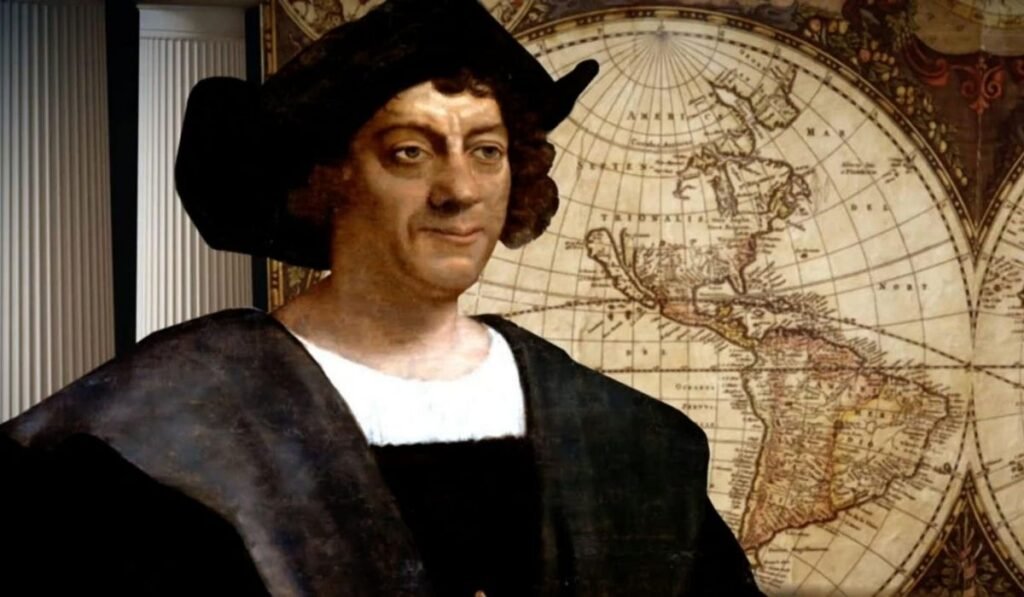
Although formal schooling was limited, Christopher Columbus possessed an insatiable curiosity that drove him to master multiple subjects independently. He immersed himself in extensive readings concerning geography, astronomy, history, and classical cartography to expand his intellectual horizons. By studying accounts written by earlier travelers and scholars, he formulated his own ambitious theories about planetary dimensions and oceanic routes. This self-directed education allowed Christopher Columbus to converse confidently with royal advisors and experienced captains, presenting arguments that challenged conventional geographical wisdom of the late fifteenth century.
The Vision of a Western Route
The desire to bypass traditional overland trade networks inspired Christopher Columbus to conceptualize a direct western sea passage toward Asian markets. Based on flawed calculations regarding the Earth’s circumference, he firmly believed that Asia lay much closer to Europe across the western ocean. Despite facing widespread skepticism from European experts who correctly estimated a much greater distance, he refused to abandon his grand vision. Christopher Columbus spent years traveling from court to court, tirelessly pitching his unorthodox proposal to various monarchs in pursuit of necessary financial backing.
Securing Royal Patronage in Spain
After experiencing numerous rejections from other European courts, Christopher Columbus finally found a receptive audience with the Spanish monarchs Ferdinand and Isabella. Following the conclusion of the Granada War, the rulers agreed to fund his ambitious expedition, hoping to expand their geopolitical influence and trade. The agreement granted him noble titles and a share of any future riches discovered along the voyage. With royal decrees in hand, Christopher Columbus traveled to the port of Palos to assemble his small fleet, marking a monumental turning point in his life.
The Historic First Voyage Begins
In August 1492, Christopher Columbus set sail from Palos with three small ships named the Niña, the Pinta, and the Santa Maria. The crew faced weeks of open ocean navigation, battling anxiety and uncertainty as they ventured farther west than any known European expedition. Morale dwindled dangerously low, prompting discussions of mutiny among weary sailors longing for land. However, steadfast determination kept Christopher Columbus moving forward, relying on his navigational expertise and keen observation of natural signs to reassure his anxious crewmates that land was near.
Landfall in the New World
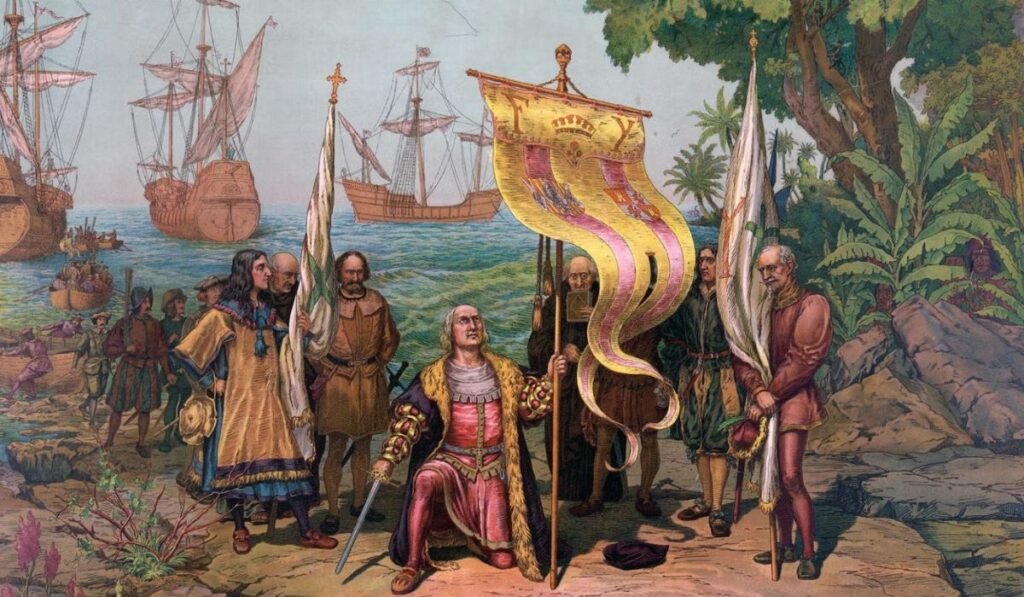
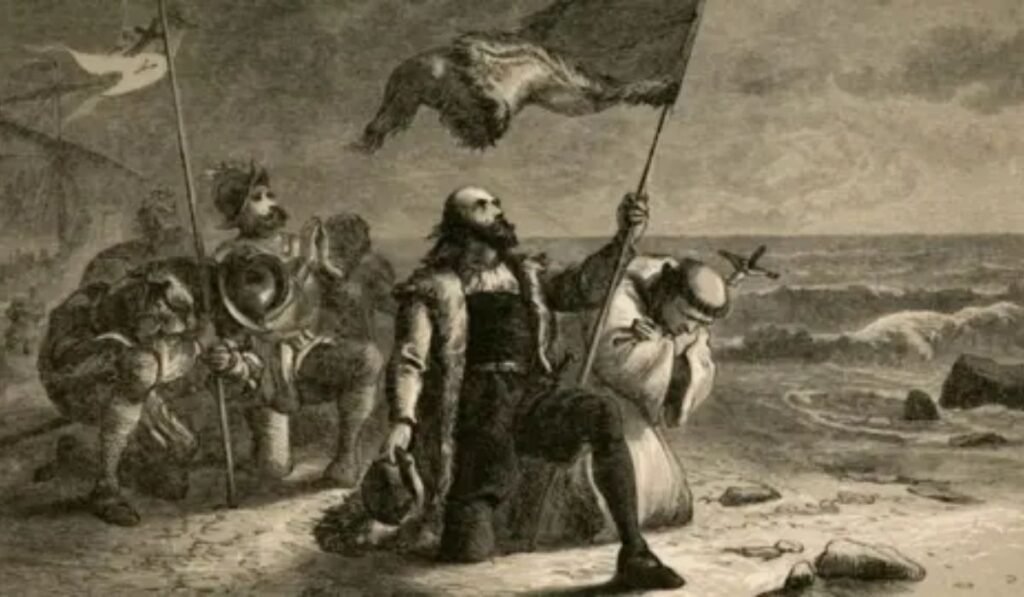
On the morning of October 12, 1492, lookout Rodrigo de Triana spotted land, bringing immense relief and jubilation to the exhausted expedition. Christopher Columbus stepped ashore on an island in the Bahamas, claiming the territory in the name of the Spanish crown. Believing he had successfully reached the outlying islands of Asia, he interacted with the indigenous Lucayan people, initiating centuries of fateful contact between two distinct worlds. This momentous landfall by Christopher Columbus effectively inaugurated the modern era of transatlantic exploration and permanent global interconnection.
Exploring the Caribbean Islands
Following his initial landfall, Christopher Columbus continued navigating through the warm turquoise waters of the Caribbean in search of wealthy Asian cities. He explored the northern coast of Cuba and the shores of Hispaniola, mapping unfamiliar coastlines and trading with local inhabitants. Although he found no traces of the grand empires of China or Japan, he observed native customs and gathered modest samples of gold. These explorations allowed Christopher Columbus to compile valuable geographic data that would guide subsequent European fleets into the newly encountered American regions.
Establishing the First Settlement
During his first voyage, misfortune struck when the flagship Santa Maria ran aground off the coast of Hispaniola and could not be repaired. Resourceful as ever, Christopher Columbus ordered his men to use timber from the wrecked ship to construct a small fortified outpost named La Navidad. Leaving a contingent of thirty-nine men behind to maintain the stronghold, he prepared for the long journey back to Europe. This makeshift garrison established by Christopher Columbus represented the very first permanent European foothold on American soil.
Triumphant Return to Europe
In early 1493, Christopher Columbus embarked on the return voyage across the Atlantic, carrying exotic plants, animals, and captured indigenous individuals to showcase his success. Upon reaching Spain, he received a hero’s welcome, with King Ferdinand and Queen Isabella listening in awe to his vibrant accounts of the overseas lands. He presented tangible evidence of potential wealth, convincing the monarchy of the immense value hidden across the western ocean. This triumphant reception propelled Christopher Columbus to international fame, elevating his status to Admiral of the Ocean Sea.
The Grand Second Voyage
Buoyed by overwhelming public acclaim, Christopher Columbus organized a massive second expedition in 1493 consisting of seventeen ships and over a thousand eager settlers. Their primary objectives were to expand colonization, locate precious mineral deposits, and convert indigenous populations to Christianity. Upon arriving at Hispaniola, the expedition discovered that the settlement of La Navidad had been completely destroyed by local tribes following conflicts. Undeterred, Christopher Columbus founded a new colony called Isabella, attempting to establish permanent administrative control over the newly claimed territories.
Governance Challenges and Native Conflict
Administering the fledgling colony proved exceedingly difficult, as Christopher Columbus struggled to manage disgruntled settlers and dwindling food supplies. Tensions quickly escalated with the indigenous populations due to forced labor demands, heavy tribute systems, and the introduction of European diseases. The harsh policies implemented under the authority of Christopher Columbus resulted in severe suffering and a catastrophic decline in native demographics across the region. These escalating crises severely damaged his reputation as an effective administrator in the eyes of the Spanish crown.
The Third Voyage and Mainland Discovery
In 1498, Christopher Columbus set forth on his third transatlantic expedition, steering further south to explore equatorial waters. This journey led him to the northern coast of South America, where he sighted the mainland near the Orinoco River delta. Recognizing the immense volume of fresh water flowing into the sea, Christopher Columbus correctly deduced that he had encountered a massive continent. However, upon returning to Hispaniola, he found the colony in a state of near-mutiny and administrative chaos, requiring urgent intervention to restore order.
Arrest and Return in Chains
Growing dissatisfaction with his governance prompted the Spanish monarchy to dispatch royal investigator Francisco de Bobadilla to evaluate conditions in Hispaniola. Upon arrival, Bobadilla stripped Christopher Columbus of his gubernatorial powers and ordered him arrested alongside his brothers. Stripped of his titles and humiliated, Christopher Columbus was shipped back to Spain in iron chains, facing severe public disgrace. Although Queen Isabella quickly ordered his release and restored his freedom, the dramatic downfall permanently tarnished the political career and legacy of Christopher Columbus.
The Final Voyage of Discovery
Eager to restore his tarnished honor, Christopher Columbus embarked on his fourth and final voyage in 1502, exploring the Central American coast from Honduras to Panama. He desperately searched for a passage through the landmass to reach the Indian Ocean, enduring relentless tropical storms, worm-infested ships, and hostile encounters. Stranded on the island of Jamaica for a year due to shipwrecked vessels, Christopher Columbus and his remaining crew faced immense hardships before rescue ships finally arrived. A weary and disheartened Christopher Columbus returned to Spain in 1504, closing the chapter on his seafaring adventures.
Final Years and Passing
The final years of Christopher Columbus were marked by declining health, ongoing financial disputes with the royal crown, and relative obscurity. He spent considerable time compiling his journals and religious writings, reflecting upon the profound spiritual and historical significance of his maritime achievements. On May 20, 1506, Christopher Columbus passed away in Valladolid, Spain, believing until his final breath that he had reached the edges of Asia. Following his death, the mortal remains of Christopher Columbus traveled across multiple gravesites before finding a permanent resting place in Seville Cathedral.
Historical Significance and Global Impact
The momentous expeditions led by Christopher Columbus fundamentally altered the course of human history by bridging two previously isolated hemispheres. His voyages initiated the Columbian Exchange, a massive global transfer of plants, animals, cultures, and populations between the Old World and the New World. While this integration stimulated unprecedented economic growth and scientific knowledge in Europe, it simultaneously brought devastation and cultural disruption to indigenous societies. Consequently, the complex historical footprint left by Christopher Columbus continues to inspire rigorous debate and profound global reflection.
Modern Commemoration and Controversy
In contemporary times, public perception regarding Christopher Columbus has evolved from uncritical celebration to intense historical re-evaluation. While historical monuments and annual holidays historically honored his maritime courage, modern society increasingly acknowledges the darker realities of European colonization. Many regions have replaced traditional Columbus Day celebrations with Indigenous Peoples’ Day to honor the resilience of native populations. Educational institutions now examine both the navigational achievements and the tragic human costs associated with Christopher Columbus in a balanced historical context.
Enduring Legacy in Popular Culture
Throughout centuries of storytelling, poetry, art, and cinema, Christopher Columbus has remained an iconic and polarizing figure in global popular culture. Schools worldwide teach students about his iconic 1492 journey as a defining moment that redefined human geography and exploration. Cartographic advancements, geographical terminology, and international traditions continually bear witness to his lasting historical footprint. Ultimately, the dramatic life story of Christopher Columbus serves as a powerful reminder of how human curiosity and ambition can reshape the destiny of entire civilizations.
Reflections on a Navigator’s Journey
Looking back across five centuries, the epic career of Christopher Columbus remains one of the most thoroughly scrutinized narratives in maritime history. His exceptional courage and unwavering persistence pushed human exploration into uncharted realms, unlocking doors to a completely new world. At the same time, the profound suffering inflicted upon native populations underscores the vital importance of ethical responsibility in leadership and cross-cultural contact. As generations continue to study his voyages, Christopher Columbus endures as a symbol of human ingenuity coupled with the complex consequences of historical expansion.
FAQs
- When was Christopher Columbus born?
- Christopher Columbus was born in Genoa, Italy, between August 25 and October 31, 1451.
- Which countries funded his first voyage?
- His historic 1492 expedition was sponsored by King Ferdinand II and Queen Isabella I of Spain.
- What were the names of his three ships?
- His famous fleet consisted of the Niña, the Pinta, and the Santa Maria.
- Where did Christopher Columbus first make landfall?
- He first made landfall on an island in the Bahamas on October 12, 1492.
- When did Christopher Columbus pass away?
- He passed away due to age-related health issues on May 20, 1506, in Valladolid, Spain.