 admin
admin
The iconic journey of Bill Gates began in Seattle, where a young visionary developed an early and deep fascination with computer programming and software development. Long before revolutionizing personal computing, he spent countless hours at his prep school terminal, unknowingly laying the foundation for a technological empire that would completely transform modern global communication, workplace productivity, and the entire digital landscape forever. His relentless drive, exceptional intellect, and unwavering ambition propelled him to drop out of Harvard University to establish Microsoft alongside his childhood friend Paul Allen. Today, his profound impact extends far beyond software creation into worldwide philanthropy.
Quick Bio
| Attribute | Detail |
| Full Name | William Henry Gates III |
| Date of Birth | October 28, 1955 |
| Place of Birth | Seattle, Washington |
| Co-founded | Microsoft Corporation |
| Spouse | Melinda French (m. 1994; div. 2021) |
| Children | 3 |
Early Childhood and Family Background in Seattle
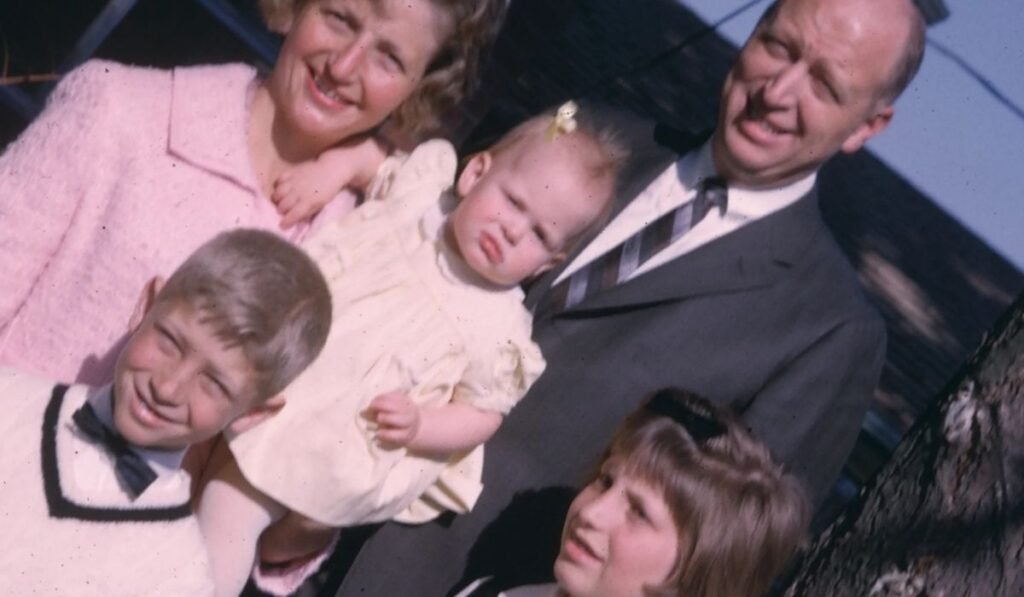
Growing up in an upper-middle-class family in Washington, Bill Gates experienced an upbringing that encouraged academic excellence, heavy reading, and competitive spirit. His father worked as a prominent corporate attorney while his mother served on boards for major civic organizations and educational institutions. Even during his early school years, young Bill exhibited extraordinary mathematical capabilities and devoured reference books like encyclopedias for pure entertainment. Recognizing his unique intellectual needs, his parents enrolled him at the exclusive Lakeside Preparatory School. This pivotal environment ultimately introduced him to the wondrous world of mainframe computers and teletype terminals.
Discovery of Computers at Lakeside School
Entering the doors of Lakeside School opened up an entirely new horizon for Bill Gates as he encountered his very first interactive computer system. He immediately spent every available free moment mastering programming logic, writing a rudimentary tic-tac-toe game, and exploring machine code alongside other tech-minded peers. School administrators quickly noticed his intense obsession and excused him from standard mathematics classes so he could expand his coding capabilities. These formative teenage hours spent debugging software and testing hardware constraints solidified a lifelong passion that would dictate the trajectory of Bill Gates and global technology.
Forming a Lifelong Partnership with Paul Allen
The legendary collaboration between Bill Gates and Paul Allen began blossoming during their high school days navigating primitive computing hardware around Seattle. Sharing an unprecedented vision of a computer on every desk and in every home, the duo formed early student programming groups to analyze systems for commercial enterprises. They even launched a small venture called Traf-O-Data to process traffic measurement tapes using early microprocessors. This deep technical synergy created an unbreakable professional bond that weathered numerous early obstacles and directly paved the way for launching Bill Gates into international corporate stardom.
Academic Pursuits and the Harvard University Years

Following high school graduation, Bill Gates enrolled at Harvard University in 1973, initially intending to follow his father’s footsteps into a respectable legal career. However, traditional coursework frequently took a backseat to marathon computer lab sessions and intense all-night poker games with fellow students like Steve Ballmer. He approached his studies with bursts of intense last-minute cramming, yet his mind remained entirely consumed by the emerging microcomputer revolution. Realizing that the technological shift was happening immediately, Bill Gates made the bold choice to leave Harvard during his junior year.
The Birth and Foundation of Microsoft Corporation
Leaving university behind allowed Bill Gates and Paul Allen to relocate to Albuquerque, New Mexico, where they officially established Microsoft in 1975. Their primary objective was creating customized software solutions, starting with adapting the BASIC programming language for the pioneering Altair 8800 microcomputer. Working furiously out of modest motel rooms and cramped offices, Bill Gates managed every single line of code, reviewed business contracts, and plotted aggressive expansion strategies. This small startup culture cultivated by Bill rapidly grew into an ambitious juggernaut destined to rewrite the rules of international commerce.
Securing the Historic IBM Contract Partnership

A defining turning point for Bill Gates occurred when International Business Machines approached the fledgling software firm seeking an operating system for their upcoming personal computer. Demonstrating remarkable business foresight, Bill Gates secured rights to a rudimentary operating system, adapted it into MS-DOS, and licensed it to IBM while retaining crucial intellectual property rights. This masterstroke allowed Microsoft to license the software to clone manufacturers later, skyrocketing the company’s market dominance. Through this tactical maneuver, Bill successfully positioned Microsoft as the undisputed gatekeeper of the personal computing era.
Releasing the Revolutionary Windows Operating System
As computing power evolved rapidly through the nineteen-eighties, Bill Gates recognized that command-line interfaces needed replacement with intuitive graphical user environments. The subsequent rollout of the Microsoft Windows operating system introduced millions of everyday consumers to point-and-click computing, windows, and drop-down menus. Despite fierce industry competition and complex developmental roadblocks, Bill Gates maintained an unyielding focus on making software accessible to mainstream households. This strategic pivot cemented Microsoft Windows as the ubiquitous global standard running on the vast majority of personal computers worldwide.
Leadership Style and Executive Management Approach
Operating as chief executive officer, Bill Gates fostered an intensely demanding, high-pressure corporate culture driven by fierce intellectual rigor and microscopic attention to detail. He famously challenged engineering teams during product reviews, demanding absolute perfection and deep technical mastery from every employee regardless of seniority. Bill Gates believed that complacency was the ultimate enemy of technology corporations, pushing his workforce to constantly anticipate market shifts. This rigorous management philosophy ensured that Microsoft consistently out-innovated rivals and maintained absolute supremacy across multiple software sectors.
Anticipating and Embracing the Internet Age
When the commercial internet began exploding in the mid-nineteen-nineties, Bill Gates initially underestimated its disruptive speed before issuing an urgent internal memo refocusing the entire corporation. He directed massive engineering resources toward developing internet-compatible browser technologies, network infrastructure, and enterprise solutions. By aggressively integrating web connectivity directly into the core operating system framework, Bill successfully navigated Microsoft through one of the most perilous technological transitions in corporate history. This decisive turnaround proved that Bill Gates possessed the strategic adaptability required to survive evolving digital landscapes.
Facing Major Antitrust Legal Scrutiny and Trials
The astronomical success of Microsoft inevitably drew intense regulatory scrutiny, culminating in major federal antitrust lawsuits alleging anti-competitive business practices. During these protracted legal battles, depositions and court appearances thrust Bill Gates into an uncomfortable spotlight as critics painted him as an aggressive corporate monopolist. Despite facing potential structural breakup remedies, Bill Gates defended company strategies while gradually learning to navigate public relations and governmental compliance more diplomatically. These landmark legal proceedings ultimately reshaped how large technology conglomerates operate within modern global markets.
Transitioning Away from Day-To-Day Corporate Operations
After steering Microsoft through decades of unprecedented growth, Bill Gates decided to step down as chief executive officer in the year 2000, handing leadership duties over to Steve Ballmer. He transitioned into the role of chief software architect to continue guiding core technical developments before stepping back from daily management entirely. This planned transition allowed Bill Gates to shift his legendary problem-solving focus away from commercial software and toward global humanitarian challenges. His departure marked the end of an era for Microsoft while opening a transformative new chapter of global philanthropy.
Establishing the Bill and Melinda Gates Foundation
Together with his former spouse Melinda, Bill Gates established the world’s largest private charitable foundation in 2000 to tackle severe global health and educational inequalities. Applying venture capitalism principles to philanthropy, Bill demanded measurable outcomes, data-driven strategies, and rigorous scientific research for every funded initiative. The organization poured billions of dollars into developing vaccines, upgrading agricultural systems in developing nations, and transforming public schooling systems. Through this monumental philanthropic vehicle, Bill Gates successfully redefined what billionaire giving can achieve on an international scale.
Combating Global Infectious Diseases and Polio Eradication
A primary focus area for the foundation under the guidance of Bill Gates has been the near-total eradication of infectious diseases like polio, malaria, and measles. By partnering with global health organizations, local governments, and research scientists, Bill Gates funded vaccination campaigns that saved millions of children’s lives in remote regions. He routinely travels to developing nations to inspect field operations, review medical progress, and hold international leaders accountable for public health commitments. This relentless medical crusade stands as one of the most impactful humanitarian efforts ever undertaken by a private citizen.
Investing Heavily in Clean Energy and Climate Solutions
Recognizing climate change as an existential threat to humanity, Bill Gates founded Breakthrough Energy to finance breakthrough innovations in zero-carbon power generation and storage. He also established TerraPower to develop advanced nuclear reactor designs that produce cleaner energy while minimizing radioactive waste materials. Bill advocates tirelessly for heavy public and private investment in green technologies to reduce emissions affordably without harming developing economies. Through these climate-focused ventures, Bill Gates continues applying engineering mindsets to solve complex planetary survival equations.
Authorship, Reading Habits, and Intellectual Pursuits
Beyond software and philanthropy, Bill Gates remains a voracious lifelong reader, consuming dozens of books annually across history, science, economics, and public policy. He frequently publishes reading recommendations on his personal blog, sharing insights on literature that shapes his worldview and future predictions. Additionally, Bill Gates authored several best-selling books, including The Road Ahead and How to Avoid a Climate Disaster, detailing technological futures. His written works provide deep windows into how Bill Gates analyzes global systems, economic patterns, and human progress.
Honors, Awards, and International Recognition Accolades
Throughout his remarkable life, Bill Gates has received countless prestigious awards, honorary degrees, and global accolades recognizing his extraordinary business and humanitarian contributions. Notable honors include receiving the Presidential Medal of Freedom alongside his foundation co-chair in recognition of their transformative philanthropic impact. Magazines and international institutions consistently rank Bill Gates among the most influential people of the twentieth and twenty-first centuries. These honors underscore how deeply Bill Gates has shaped modern civilization through both technology creation and charitable giving.
Reflecting on Personal Growth and Autobiographical Memoirs
In recent years, Bill Gates has engaged in deeper personal introspection, culminating in the publication of comprehensive autobiographical memoirs examining his complex childhood and early career. In these written reflections, Bill Gates openly discusses navigating social awkwardness, intense family expectations, and viewing life through a rigorous prism of mathematics. Sharing these vulnerable personal details allows admirers and critics alike to understand the human elements behind the global billionaire icon. These reflections prove that Bill Gates continues evolving personally while maintaining his lifelong quest for intellectual understanding.
Ongoing Influence on Artificial Intelligence and Future Tech
Even in his post-corporate years, Bill Gates remains deeply fascinated by emerging technologies, particularly the explosive growth of artificial intelligence and machine learning systems. He frequently consults with Microsoft engineering teams and evaluates AI models, predicting that artificial intelligence will revolutionize education, healthcare, and labor markets. Bill Gates views modern AI as revolutionary as the graphical user interface he championed decades ago. By keeping a close eye on future innovations, Bill Gates ensures his legacy remains connected to the cutting edge of human progress.
Enduring Legacy of Innovation and Global Philanthropy
The extraordinary life story of Bill Gates serves as a defining testament to the power of vision, intense dedication, and relentless problem-solving capabilities. From writing early code on school teletype machines to orchestrating the global personal computer revolution, Bill Gates permanently altered how humanity communicates and works. Through his ongoing philanthropic initiatives, climate investments, and health crusades, Bill Gates continues uplifting vulnerable populations across the world. Ultimately, the lasting legacy of Bill Gates will be remembered as a balanced equation of digital transformation and profound humanitarian compassion.
Frequently Asked Questions
- When was Bill Gates born?
- Bill Gates was born on October 28, 1955, in Seattle, Washington.
- What company did Bill Gates co-found?
- He co-founded Microsoft Corporation alongside his childhood friend Paul Allen in 1975.
- Did Bill Gates graduate from college?
- No, he dropped out of Harvard University during his junior year to focus full-time on running Microsoft.
- What is the name of his philanthropic organization?
- He co-founded the Bill & Melinda Gates Foundation, currently known as the Gates Foundation.
- What major award did he receive in 2016?
- He was awarded the prestigious Presidential Medal of Freedom for his global philanthropic endeavors.