 admin
admin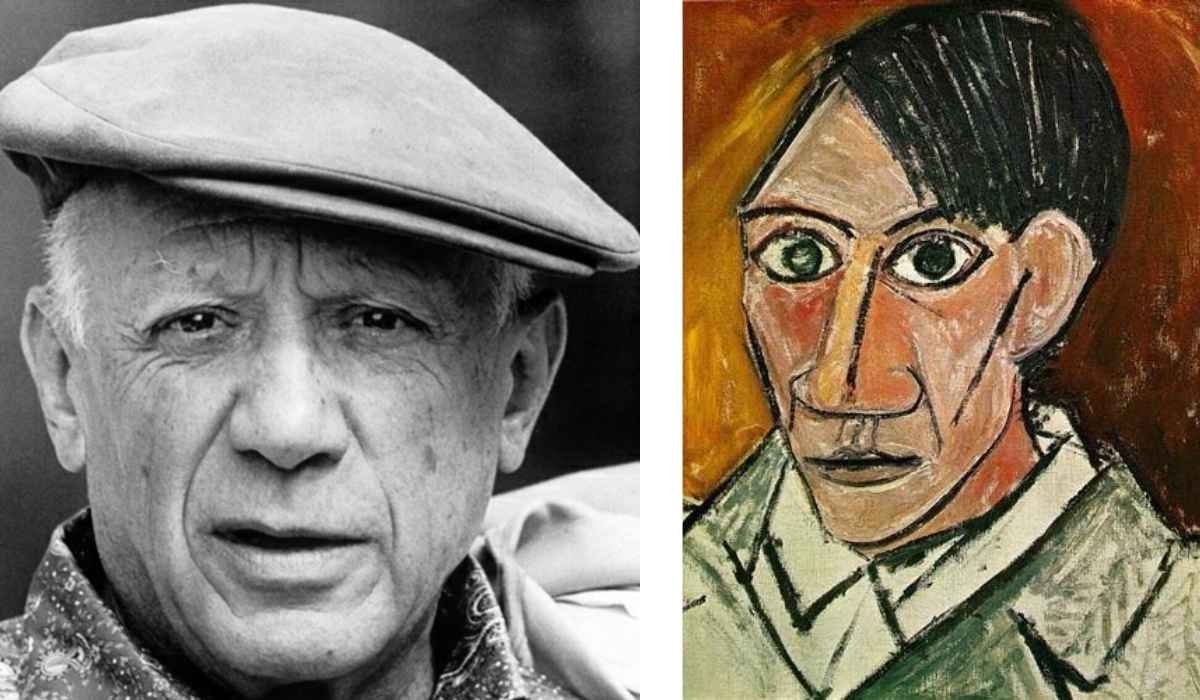
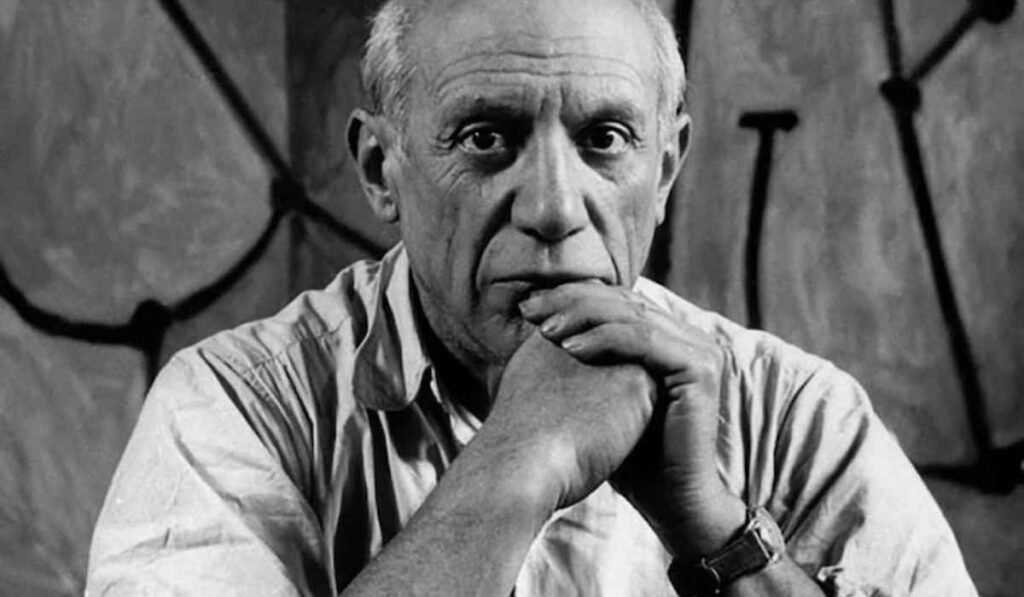
Pablo Picasso remains one of the most towering and influential figures in the history of modern art, known worldwide for his boundless creativity and relentless reinvention. Born in Spain in 1881, he spent the majority of his adult life living and working in France, where he continuously pushed the boundaries of traditional creative expression. Over a prolific career spanning more than eight decades, he produced tens of thousands of works encompassing paintings, sculptures, ceramics, and printmaking. His artistic journey reshaped the global visual culture and established entirely new paradigms for how humanity perceives form, color, and perspective.
Quick Bio
| Attribute | Detail |
| Full Name | Pablo Ruiz y Picasso |
| Birth Date | October 25, 1881 |
| Birth Place | Málaga, Spain |
| Death Date | April 8, 1973 |
| Key Movement | Cubism |
Early Childhood and Artistic Foundation
Pablo Picasso displayed extraordinary artistic talent from a very young age, nurtured closely by his father who worked as an academic art teacher and museum curator. Growing up in a structured household in Spain, young Pablo mastered classical techniques and rigorous academic proportions with astonishing speed, quickly surpassing standard instructional levels. His early adolescence was defined by traditional oil paintings and portraits that showcased a deep technical understanding of realistic representation, even though his ambitious spirit already yearned to explore beyond strict academic rules. This foundational discipline provided Pablo Picasso with the essential skills required to later deconstruct visual reality in revolutionary ways.
Moving to Barcelona and Academic Rebellion
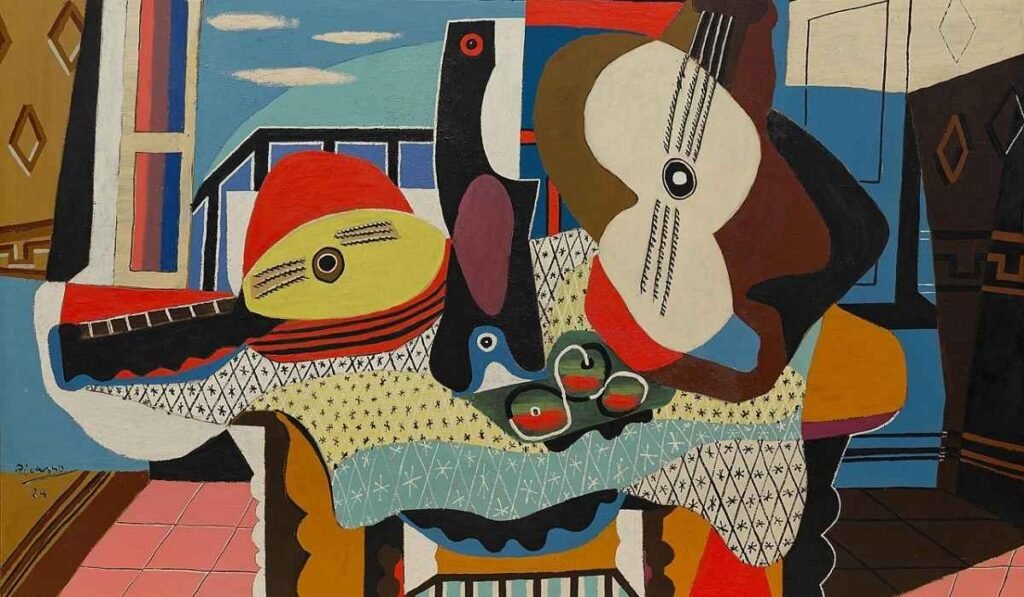
Relocating to Barcelona during his teenage years exposed Pablo Picasso to a vibrant and progressive modernist revolution that stimulated his independent artistic spirit. Although he briefly attended the prestigious Royal Academy of San Fernando in Madrid, he felt profoundly constrained by the rigid teaching methods and conventional expectations of his professors. Preferring to study the masterworks housed in local museums rather than follow formal classroom lectures, he chose an independent path of self-guided discovery. This rebellious phase allowed Pablo Picasso to forge a distinct creative identity that broke away cleanly from standard 19th-century academic traditions.
The Discovery of Paris and the Art Capital
Arriving in Paris at the turn of the century introduced Pablo Picasso to the bustling epicenter of European avant-garde culture and intellectual exchange. Living in impoverished conditions alongside struggling poets and writers in Montmartre, he immersed himself completely in the bohemian lifestyle of the French capital. These challenging early years in Paris forced him to rely entirely on his inner resilience and creative ingenuity while forging lifelong friendships within the artistic community. The vibrant energy of Paris ultimately inspired Pablo Picasso to permanently adopt his mother’s maiden name, symbolizing a definitive artistic break from his past.
The Melancholic Depths of the Blue Period
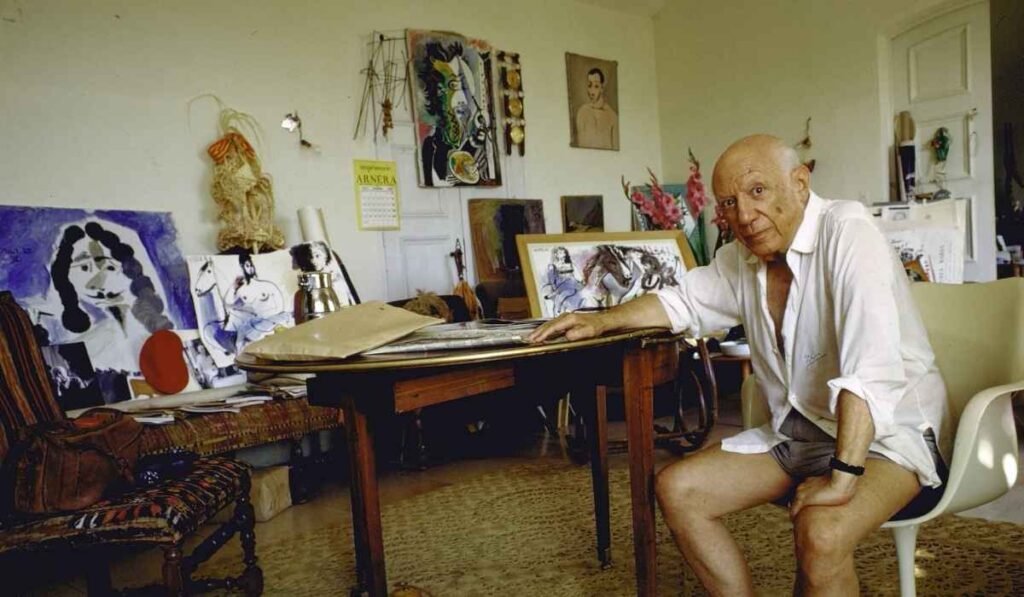
Following the tragic suicide of a close friend, Pablo Picasso entered a deeply introspective and somber phase known as the Blue Period. Between 1901 and 1904, his color palette shifted dramatically toward monochromatic shades of indigo, cobalt, and teal to reflect themes of human poverty, despair, and isolation. Masterpieces created during this era, such as The Old Guitarist, captured the bleak realities of marginalized outcasts, beggars, and blind individuals living on society’s fringes. Through these emotionally heavy compositions, Pablo Picasso demonstrated an extraordinary capacity to channel psychological pain and universal suffering directly onto the canvas.
The Warm Transformation of the Rose Period
Transitioning away from profound melancholy, Pablo Picasso entered his brighter Rose Period from 1904 to 1906, embracing warmer shades of pink, red, orange, and tan. His artistic subjects shifted toward circus performers, acrobats, harlequins, and traveling entertainers, capturing a more tender and whimsical human spirit. During this uplifting era, he gained critical attention from prominent collectors like Gertrude Stein, which helped elevate his professional standing within Parisian elite circles. This distinctive chapter allowed Pablo Picasso to experiment further with delicate line work and emotional warmth before embarking on radical structural departures.
The Influence of African Art and Primitivism
Fascinated by traditional African tribal masks and Iberian sculptures displayed in Parisian ethnographic museums, Pablo Picasso began exploring primitive aesthetic forms around 1907. He recognized that non-Western artistic traditions relied on conceptual memory and expressive distortion rather than strict optical illusion, inspiring a radical shift in his work. By stripping away conventional perspective and smoothing out facial features into stylized geometric planes, he challenged European assumptions about beauty and representation. This exploratory phase served as a crucial stepping stone that directly enabled Pablo Picasso to invent entirely new visual languages.
The Birth of Cubism and Les Demoiselles d’Avignon
Painted in 1907, the monumental canvas Les Demoiselles d’Avignon marked a seismic revolution in Western art history through its fragmented depiction of five female figures. Collaborating closely with fellow artist Georges Braque, Pablo Picasso developed Cubism, a movement that broke objects down into geometric facets and multiple simultaneous viewpoints. This revolutionary style completely shattered Renaissance perspective rules, allowing viewers to experience three-dimensional space on a flat surface in an entirely unprecedented manner. With this groundbreaking invention, Pablo Picasso fundamentally altered the trajectory of modern and contemporary artistic creation.
Analytic Cubism and Deconstructed Forms
During the phase of Analytic Cubism between 1909 and 1912, Pablo Picasso and Georges Braque pushed their geometric deconstruction to its absolute structural limits. Working with a restricted, neutral palette of monochromatic browns, grays, and ochres, they fractured subjects into intricate webs of overlapping planes and intersecting lines. The goal was not to capture optical likeness, but rather to analyze the underlying architecture of objects by presenting multiple angles simultaneously. This intellectual approach required viewers to actively decode the canvas, establishing Pablo Picasso as a fearless pioneer of abstract visual communication.
Synthetic Cubism and the Invention of Collage
Continuing his relentless experimentation, Pablo Picasso introduced Synthetic Cubism around 1912 by incorporating real-world objects and textured materials directly into his artworks. By pasting printed paper, oilcloth, newspaper clippings, and matchboxes onto canvas surfaces, he co-invented collage, bridging the gap between high art and everyday life. This innovative technique expanded the physical dimensions of painting and inspired subsequent generations of artists to embrace mixed-media experimentation. Through synthetic arrangements, Pablo Picasso proved that everyday consumer scraps could possess profound aesthetic and conceptual value.
Neoclassical Return to Order and Monumentality
In the aftermath of the devastation caused by World War I, Pablo Picasso experienced a stylistic shift toward neoclassicism, drawing heavy inspiration from ancient Greco-Roman antiquity. He began producing monumental, heavy-limbed figurative paintings that celebrated physical solidity, classical harmony, and traditional sculptural weight. This return to representational order demonstrated his versatility and technical mastery, proving he could move effortlessly between avant-garde abstraction and classical grandeur. Even while exploring antiquity, Pablo Picasso maintained an unmistakable personal intensity that set his neoclassical figures apart from academic imitations.
Exploration of Surrealism and Unconscious Imagery
During the late 1920s and 1930s, Pablo Picasso aligned closely with the Surrealist movement, using his art to explore the mysterious depths of the human unconscious mind. His canvases from this period frequently featured distorted biomorphic shapes, dreamlike atmospheres, and psychological tension that mirrored the turbulent sociopolitical climate of Europe. By bending anatomical proportions into bizarre, expressive configurations, he externalized inner fears, desires, and existential anxieties. This surrealist exploration allowed Pablo Picasso to capture complex emotional realities that transcended logical waking thought.
The Anti-War Masterpiece Guernica
Responding directly to the brutal Nazi bombing of a Basque town during the Spanish Civil War, Pablo Picasso created his monumental masterpiece Guernica in 1937. Rendered in stark, agonizing shades of black, white, and gray, the mural depicts screaming figures, tortured animals, and burning buildings to expose the horrific suffering inflicted by modern warfare. Displayed internationally to raise awareness and funds for Spanish refugees, the painting instantly became the most famous and powerful political protest artwork in history. Through Guernica, Pablo Picasso cemented his role as a socially conscious creator who used his immense platform to denounce tyranny.
World War II and Life Under Occupation
Throughout the Nazi occupation of Paris in World War II, Pablo Picasso chose to remain in the city despite facing constant surveillance, artistic restrictions, and personal danger. He continued working tirelessly in his studio, quietly producing powerful symbolic still lifes, skulls, and brooding portraits that reflected the quiet resilience of the French resistance. Following the liberation of Paris, he officially joined the French Communist Party as an expression of his enduring commitment to anti-fascist political ideals. During these difficult years, Pablo Picasso maintained his fierce independence and steadfast dedication to creative freedom.
Mastery of Ceramics and Three-Dimensional Sculpture
In his later decades, Pablo Picasso relocated to the south of France and immersed himself passionately in pottery and ceramic production at Vallauris. Transforming ordinary plates, jugs, and vases into whimsical animal and human faces, he demonstrated that applied arts deserved the same critical respect as traditional fine art painting. He simultaneously pioneered constructed sculpture, using scrap metal, bicycle parts, and found objects to assemble ingenious three-dimensional artworks. This late-career outpouring reaffirmed that Pablo Picasso possessed an endlessly inventive mind that refused to slow down with advanced age.
Prolific Later Years and Artistic Reinterpretation
Even well into his eighties and nineties, Pablo Picasso painted with staggering prolificacy, reinterpreting classic masterpieces by historical giants like Velázquez, Delacroix, and Manet. These late works were characterized by vibrant brushstrokes, raw emotional urgency, and a fearless disregard for public expectations or critical approval. He viewed art-making as a continuous daily diary of his existence, creating with the same youthful enthusiasm he possessed as a child prodigy. This tireless work ethic ensured that Pablo Picasso remained at the absolute forefront of the international art scene until his final days.
Complex Personal Life and Muse Dynamics
The intensely passionate and turbulent personal life of Pablo Picasso heavily fueled his creative output, as he frequently formed profound relationships with dynamic women who served as his artistic muses. Partners such as Fernande Olivier, Marie-Thérèse Walter, and Dora Maar deeply influenced specific periods of his career, inspiring shifts in style and emotional tone. While his romantic entanglements were often complex and demanding, they acted as vital emotional catalysts that drove his artistic evolution forward. Consequently, the biography and artwork of Pablo Picasso remain permanently intertwined, reflecting a life lived with extreme intensity.
Global Cultural Impact and Artistic Legacy
The cultural footprint left by Pablo Picasso extends far beyond the realm of painting, shaping modern architecture, fashion, graphic design, and contemporary visual thinking. Museums dedicated entirely to his life and collections attract millions of visitors annually in cities like Barcelona, Paris, and Málaga. His individual artworks consistently command record-breaking prices at major international auction houses, reflecting enduring commercial and historical value. Generations of subsequent creators continue studying his techniques, proving that the artistic vision of Pablo Picasso remains permanently relevant in the twenty-first century.
Enduring Myths and Misconceptions
Despite his universal fame, several myths persist regarding Pablo Picasso, including the misconception that he invented cubism entirely on his own without external collaboration. In reality, his close creative partnership with Georges Braque involved a continuous, back-and-forth exchange of radical ideas that shaped the movement collectively. Furthermore, many assume his early training was entirely self-taught, overlooking the rigorous academic foundation instilled by his professional art teacher father. Unpacking these historical nuances allows art enthusiasts to appreciate Pablo Picasso as both a collaborative innovator and a disciplined master.
Final Reflections on a Monumental Career
Concluding a career that spanned nearly an entire century, Pablo Picasso fundamentally redefined what it meant to be a modern artist through his unyielding courage to experiment. By rejecting stagnant conventions and embracing perpetual transformation, he expanded the expressive vocabulary of human creativity. His ability to reinvent form, challenge perspective, and capture profound emotional truth ensures his status as an immortal titan of culture. Ultimately, the legacy of Pablo Picasso serves as an eternal reminder that true artistic genius lies in the relentless pursuit of authentic expression.
FAQs
- When was Pablo Picasso born?
- Pablo Picasso was born on October 25, 1881, in Málaga, Spain.
- What art movement did Pablo Picasso co-found?
- He co-founded the Cubist movement alongside artist Georges Braque.
- What is the name of Picasso’s famous anti-war painting?
- His famous anti-war mural depicting the bombing during the Spanish Civil War is called Guernica.
- What are the names of Picasso’s famous early color periods?
- His early stylistic phases are known as the Blue Period and the Rose Period.
- When did Pablo Picasso pass away?
- He passed away on April 8, 1973, at the age of ninety-one in Mougins, France.