 admin
admin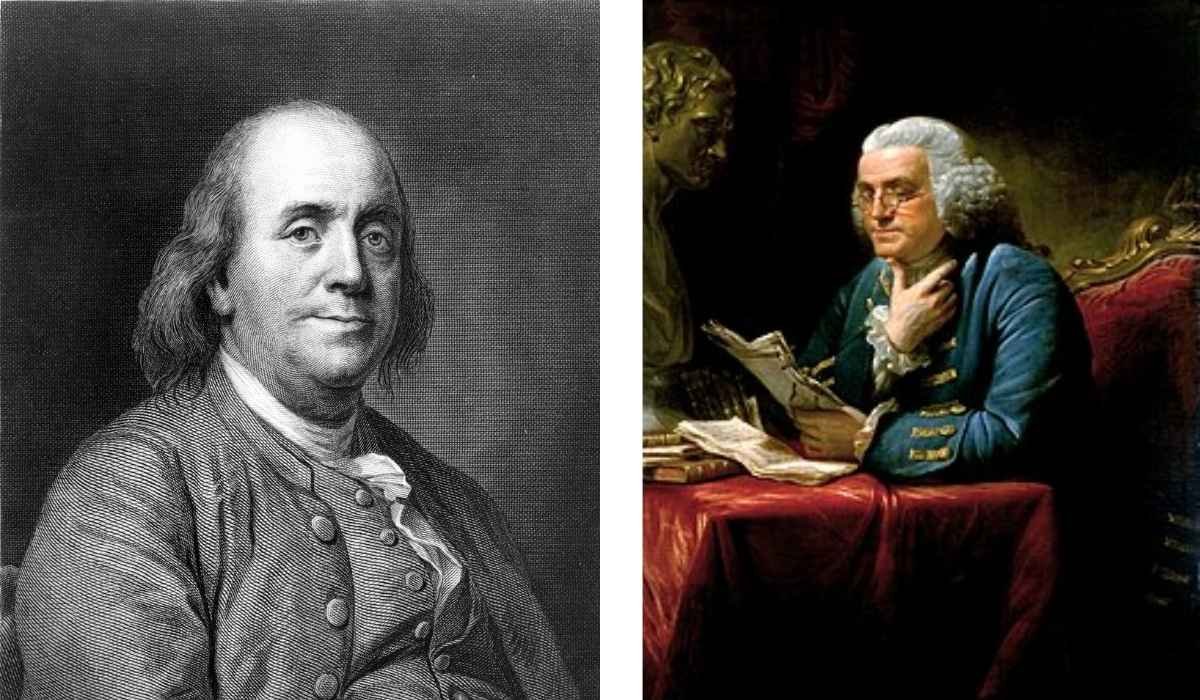
The early life of Benjamin Franklin in Boston shaped a curious mind destined to change history forever through printing, science, and public service. Born into a modest family, he developed an insatiable appetite for reading and self-improvement that guided his entire career. Escaping an apprenticeship under his brother, young Benjamin Franklin moved to Philadelphia to seek his own fortune and independence. He quickly mastered the trade of printing, establishing a successful newspaper and publishing the widely read Poor Richard’s Almanack under a clever pseudonym. His sharp intellect, boundless ambition, and profound work ethic allowed him to build a substantial fortune before retiring early to focus on scientific experimentation, civic improvement, and philosophy.
Quick Bio
| Attribute | Detail |
| Name | Benjamin Franklin |
| Birth Date | January 17, 1706 |
| Death Date | April 17, 1790 |
| Profession | Statesman, Scientist, Inventor, Printer, Diplomat |
| Key Achievements | Signing the Declaration of Independence, Inventing the Lightning Rod |
The Early Years and Journey to Philadelphia
The formative years of Benjamin Franklin began in the bustling colonial port of Boston where opportunities seemed limited for an ambitious youth. Working initially in his father’s candle shop, he soon transitioned into the printing trade under his older brother James. Dissatisfied with harsh treatment, Benjamin Franklin made the bold decision to run away, eventually arriving in Philadelphia with very little money but immense determination. This bustling city would become his lifelong home and the canvas for his numerous civic and professional achievements. By securing employment in local print shops, he honed his technical expertise and established vital social networks among local merchants, intellectuals, and political leaders.
Rise as a Master Printer and Publisher
Establishing a printing enterprise required immense dedication, a trait that defined the professional trajectory of Benjamin Franklin during his twenties. He soon gained full ownership of the Pennsylvania Gazette, transforming it into one of the most respected and widely circulated newspapers in the American colonies. Building upon this commercial success, Benjamin Franklin launched Poor Richard’s Almanack, which featured practical wisdom, weather predictions, and memorable aphorisms that resonated with everyday colonists. Through clever business strategies and unmatched productivity, he accumulated substantial wealth, enabling him to step away from day-to-day commercial operations and dedicate his time to intellectual pursuits, scientific inquiry, and community betterment initiatives.
Innovations in Civic Infrastructure and Organizations
Community betterment became a driving passion for Benjamin Franklin as he spearheaded numerous initiatives to modernize Philadelphia and improve daily urban life. He recognized the urgent need for collaborative learning and founded the Junto, a mutual improvement club that eventually led to the creation of the Library Company of Philadelphia. Always looking out for public safety, Benjamin Franklin organized the first volunteer fire company in the city and advocated for organized night watch patrols. His vision for higher education culminated in the establishment of the Academy and College of Philadelphia, which later evolved into the prestigious University of Pennsylvania, cementing his role as a transformative pioneer in colonial educational development.
Pioneering Scientific Discoveries in Electricity
Scientific exploration brought international renown to Benjamin Franklin as he conducted groundbreaking experiments that unlocked the fundamental mysteries of electricity. His famous kite-flying experiment proved that lightning is an electrical phenomenon, bridging the gap between theoretical physics and atmospheric science during the Age of Enlightenment. Harnessing this vital discovery, Benjamin Franklin invented the lightning rod, a simple yet brilliant device designed to protect wooden structures and tall buildings from catastrophic fires. This invention was rapidly adopted across Europe and North America, showcasing how his practical ingenuity could directly safeguard human lives and property from the unpredictable forces of nature.
Ingenious Practical Inventions for Everyday Life
Practical problem-solving characterized every mechanical creation designed by Benjamin Franklin throughout his prolific and endlessly curious lifetime. Rather than seeking personal financial gain through exclusive patents, Benjamin Franklin freely shared his inventions for the general improvement of society. Among his most notable household creations was the Franklin stove, a metal-lined fireplace that provided significantly more heat while consuming far less firewood than traditional masonry hearths. Additionally, facing his own struggles with failing vision as he aged, Benjamin Franklin invented bifocal glasses, allowing wearers to seamlessly transition between distance viewing and close-up reading through a single ingenious dual-lens frame configuration.
Contributions to Colonial Postal Systems
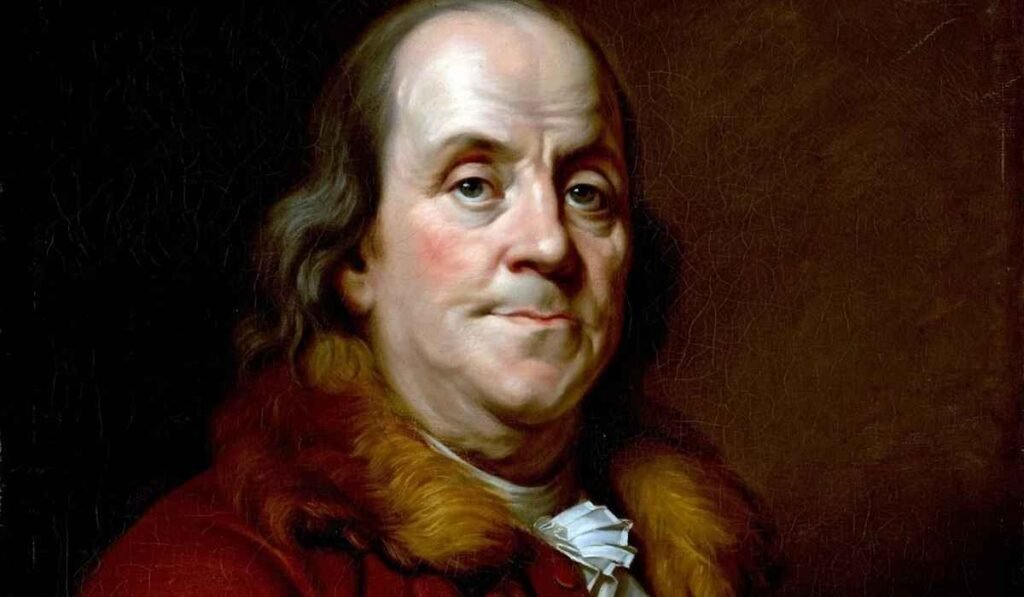
Efficient communication across the sprawling American colonies was heavily optimized by the administrative prowess of Benjamin Franklin during the mid-eighteenth century. Appointed as deputy postmaster-general for the British colonies, Benjamin Franklin completely overhauled the sluggish mail delivery infrastructure. He mapped out faster delivery routes, standardized postal rates, and introduced overnight delivery services between major urban centers like New York and Philadelphia. Under the guidance of Benjamin Franklin, the postal network became profitable for the first time while simultaneously facilitating the rapid exchange of revolutionary political ideas, commercial news, and personal correspondence essential for unifying the disparate colonies against mounting imperial pressures.
Early Political Involvement and Assembly Leadership
Civic duty naturally drew Benjamin Franklin into the complex arena of colonial politics and provincial governance within Pennsylvania. Serving for many years as the clerk of the Pennsylvania General Assembly, Benjamin Franklin quickly graduated to holding elected office as a representative for the city of Philadelphia. He navigated volatile political disputes between the colonial proprietors and elected representatives with diplomatic skill and pragmatic compromise. His clear-headed administrative strategies earned him deep respect among his peers, setting the stage for him to take on greater responsibilities representing colonial interests on the international stage against the increasingly burdensome policies imposed by the British Parliament.
The Albany Plan of Union and Colonial Unity
Advocating for collective security, Benjamin Franklin proposed the Albany Plan of Union during the onset of the French and Indian War. This visionary proposal marked one of the earliest formal attempts to create a unified government encompassing all thirteen individual American colonies for mutual defense. Although colonial assemblies and the British Crown ultimately rejected the plan due to fears of losing localized control, Benjamin Franklin planted the critical ideological seeds for future continental solidarity. His famous Join, or Die political cartoon served as a powerful visual reminder that individual colonies would easily be defeated separately unless they chose to cooperate under a centralized umbrella of mutual strength.
Diplomatic Mission in London and Defending Colonial Rights
Representing colonial interests abroad consumed nearly two decades of the later life of Benjamin Franklin while he resided in London as an official agent. He tirelessly lobbied members of the British Parliament and the royal court to protect American economic rights and liberties from unfair taxation schemes. When the deeply unpopular Stamp Act sparked widespread outrage across the Atlantic, Benjamin Franklin delivered powerful testimony before Parliament, brilliantly explaining why the tax was unjust and unsustainable. His persuasive defense and diplomatic pressure directly contributed to the eventual repeal of the Stamp Act, elevating his status to that of an international hero among aggrieved American colonists.
Return to America and the Revolutionary Crisis
Returning to Philadelphia as tensions with Great Britain reached a boiling point, Benjamin Franklin immediately immersed himself in the unfolding American Revolution. Realizing that peaceful reconciliation was no longer possible, Benjamin Franklin threw his full support behind the radical movement for complete independence. The Second Continental Congress welcomed his vast wisdom, appointing him to elite committees tasked with organizing wartime logistics, currency production, and intelligence networks. Benjamin Franklin utilized his legendary composure and sharp political instincts to guide younger revolutionaries through moments of extreme doubt, ensuring that the fledgling resistance maintained a unified front against the formidable military might of the British Empire.
Drafting the Declaration of Independence
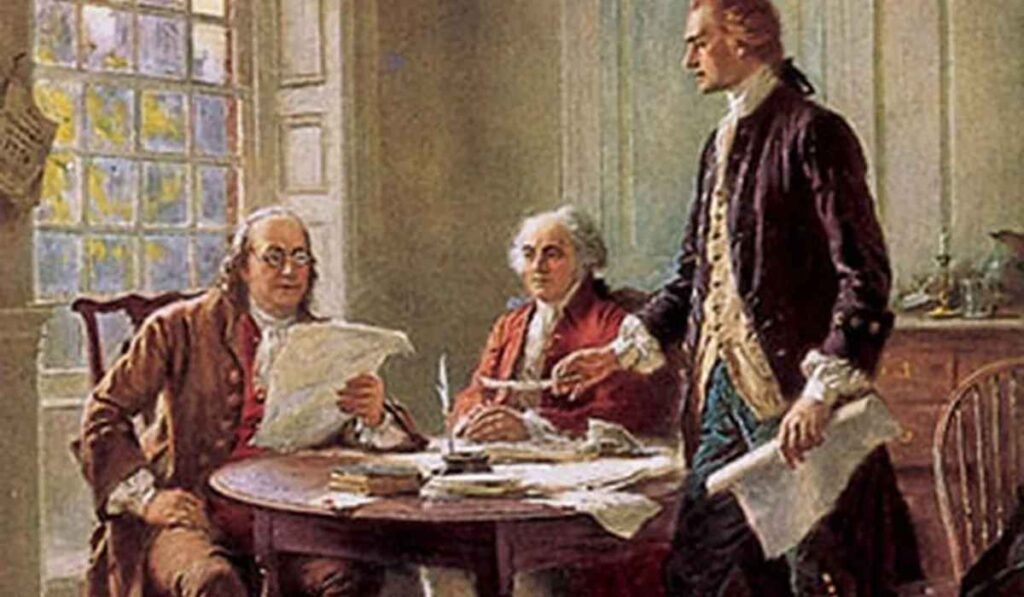
Historical legacy was permanently shaped when Benjamin Franklin joined the elite Committee of Five charged with drafting the Declaration of Independence. While primary author Thomas Jefferson crafted the eloquent prose, Benjamin Franklin provided crucial editorial edits and moral support to strengthen the document’s revolutionary arguments. Recognizing the immense personal danger they faced, Benjamin Franklin reportedly offered a witty and unifying remark about the necessity of hanging together rather than separately. As a proud representative from Pennsylvania, Benjamin Franklin proudly affixed his signature to the Declaration of Independence, committing his life, fortune, and sacred honor to the birth of a new republic.
Securing French Alliance and Diplomatic Triumph
Diplomatic brilliance reached its absolute peak when Benjamin Franklin was dispatched to Paris to secure military and financial assistance from the French monarchy. Embraced by French society as an eccentric intellectual icon of the Enlightenment, Benjamin Franklin successfully charmed the royal court of King Louis XVI. His patient negotiations and strategic utilization of American military victories ultimately persuaded France to enter the war as a vital military ally. Without the crucial funding, naval support, and troops secured through the relentless diplomatic efforts of Benjamin Franklin, the continental army would have struggled immensely to achieve ultimate victory over British forces at Yorktown.
Negotiating the Treaty of Paris and Peace
Securing official recognition of American sovereignty required masterclass negotiation skills during peace talks held in the European capital of Paris. Working alongside fellow commissioners, Benjamin Franklin outmaneuvered seasoned British diplomats to secure exceptionally favorable territorial boundaries and fishing rights for the new nation. His pragmatic willingness to compromise on minor points while standing firm on core national demands culminated in the signing of the historic Treaty of Paris. This monumental treaty officially ended the Revolutionary War, forcing Great Britain to acknowledge the United States as a free, sovereign, and independent nation ready to take its rightful place on the global political stage.
The Constitutional Convention and Final Public Service
Guiding the creation of a permanent framework of government occupied the final major public chapter in the remarkable life of Benjamin Franklin. Despite suffering from severe physical ailments and advanced age during the Constitutional Convention in Philadelphia, Benjamin Franklin attended daily sessions to offer wise counsel. He frequently acted as a calming mediator during fierce debates between large and small states, urging his weary colleagues to embrace compromise for the greater good of the country. By endorsing the final United States Constitution, Benjamin Franklin completed his historic trifecta as the only individual to sign all three foundational documents of the American republic.
The Autobiography and Literary Legacy
Lasting literary significance was achieved through the famous autobiography written by Benjamin Franklin during his retirement years. Addressed primarily to his son, this unfinished manuscript offers an intimate, candid, and deeply engaging account of his rise from humble origins to international prominence. Within its pages, Benjamin Franklin outlined his famous thirteen-step program for achieving moral perfection, providing generations of readers with a timeless blueprint for personal discipline and success. The text remains a cornerstone of American literature, celebrated for its clear prose, self-deprecating wit, and profound insights into the human character and the relentless pursuit of self-betterment.
Philosophical Views and Religious Beliefs
Enlightenment ideals heavily influenced the personal philosophy and spiritual worldview embraced by Benjamin Franklin throughout his adult life. While raised in a strict Puritan household, Benjamin Franklin developed a personal deistic faith centered on practical morality, industry, and benevolent service to humanity rather than rigid theological dogmas. He famously believed that the most acceptable service rendered to God was doing good to His other children. This pragmatic ethical framework guided his philanthropic ventures, his tolerance for diverse religious opinions, and his lifelong commitment to promoting virtue, peace, and intellectual freedom across every segment of civil society.
Impact on Abolitionism and Late Life Activism
Humanitarian concerns increasingly occupied the final years of Benjamin Franklin as he actively embraced the growing movement against human chattel slavery. Serving as the president of the Pennsylvania Society for Promoting the Abolition of Slavery, Benjamin Franklin penned powerful essays and petitions challenging the moral hypocrisy of the institution. In one of his final public acts, Benjamin Franklin petitioned the United States Congress to dismantle the slave trade immediately, demonstrating his capacity for moral evolution. This courageous late-life activism proved that Benjamin Franklin remained dedicated to expanding the ideals of liberty and justice to all human beings living within the republic he helped create.
Death, Mourning, and Global Commemoration
The passing of Benjamin Franklin on April 17, 1790, at the age of eighty-four, plunged both America and Europe into deep collective mourning. Thousands of citizens attended his funeral procession in Philadelphia, paying tribute to a man whose genius had touched virtually every aspect of contemporary life. Across France, national assemblies declared official periods of mourning to honor his immense contributions to philosophy, science, and liberty. Monuments were erected, institutions were named in his honor, and his face was later immortalized on United States currency, ensuring that the legacy of Benjamin Franklin would endure as an eternal symbol of American ingenuity and civic virtue.
Enduring Influence on Modern American Culture
Cultural identity in the United States continues to be heavily shaped by the foundational values championed by Benjamin Franklin over two centuries ago. Concepts such as upward mobility, self-reliance, public education, volunteerism, and scientific innovation remain deeply ingrained in the modern American ethos thanks to his pioneering example. Whether through the timeless maxims found in his almanacs or the institutional frameworks he established, Benjamin Franklin defined what it meant to be a versatile modern citizen. His extraordinary life serves as an enduring reminder that curiosity, diligence, and public-spirited dedication possess the remarkable power to transform nations and alter the course of human history.
- When was Benjamin Franklin born?
- Benjamin Franklin was born on January 17, 1706, in Boston, Massachusetts.
- What are some of his most famous inventions?
- His most famous inventions include the lightning rod, bifocals, and the Franklin stove.
- Which foundational documents did he sign?
- He signed the Declaration of Independence, the Treaty of Paris, and the United States Constitution.
- What pen name did he use for Poor Richard’s Almanack?
- He wrote under the pseudonym Richard Saunders.
- Where did he serve as an American ambassador?
- He served as the first U.S. ambassador to France during the Revolutionary War.