 admin
admin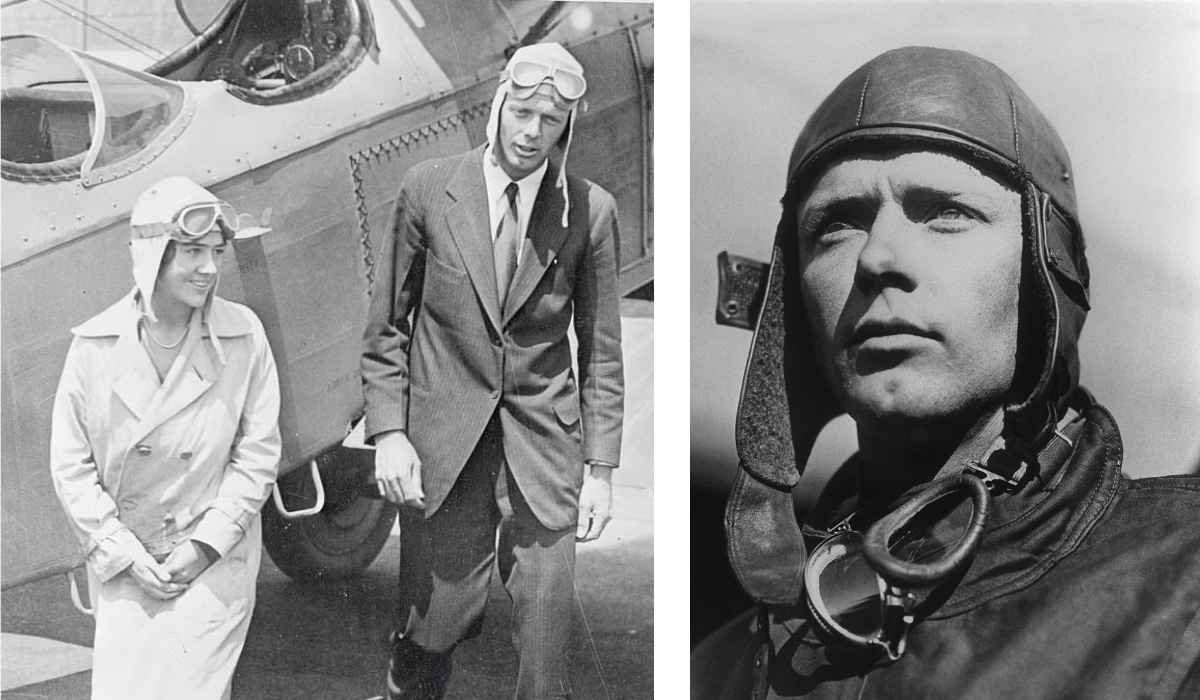
Charles Lindbergh remains one of the most iconic figures in the history of global aviation, capturing the imagination of millions worldwide through his daring spirit. Born in Detroit, Michigan, in 1902, he developed an early mechanical aptitude that eventually steered him toward the thrilling world of flight. Before achieving worldwide renown, he worked as a barnstormer and a United States airmail pilot, navigating perilous nighttime routes with unwavering determination. These formative experiences forged the exceptional resilience required for his monumental transatlantic crossing, cementing his enduring status as an American pioneer whose legacy continues to influence modern aerospace engineering.
Quick Bio Overview of Charles Lindbergh
| Metric / Detail | Information |
| Full Name | Charles Augustus Lindbergh |
| Born | February 4, 1902 (Detroit, Michigan) |
| Died | August 26, 1974 (Maui, Hawaii) |
| Famous For | First solo nonstop transatlantic flight |
| Aircraft | Spirit of St. Louis |
| Spouse | Anne Morrow Lindbergh |
| Major Award | Pulitzer Prize, Medal of Honor |
Early Childhood and Family Background
Growing up between Minnesota and Washington, D.C., Charles Lindbergh was exposed to politics and mechanics from a very young age. His father served as a progressive U.S. congressman, instilling a strong sense of independence and self-reliance in his son. Young Charles spent hours tinkering with machinery, demonstrating an innate curiosity about how mechanical systems operated. Although he briefly attended the University of Wisconsin to study engineering, his heart belonged to the open skies. Dropping out of college marked the true beginning of his lifelong romance with aviation, setting the stage for Charles Lindbergh to pursue his ultimate destiny.
Entering the Thrilling World of Aviation
Leaving formal education behind, Charles Lindbergh immersed himself completely in the rough-and-tumble culture of early 1920s aviation. He traveled across the Midwest as a daring barnstormer, performing wing-walking stunts and parachute jumps to earn a living. These high-risk aerial exhibitions sharpened his piloting skills and taught him how to handle unpredictable aircraft in emergency situations. In 1924, he took a crucial step by enlisting in the U.S. Army Air Service reserve training program. Graduating at the top of his class proved that Charles Lindbergh possessed elite technical proficiency and extraordinary natural talent behind the controls.
Mastering the Hazardous Airmail Routes
Following his military training, Charles Lindbergh accepted a position flying airmail routes out of St. Louis, Missouri. Flying mailbags through severe thunderstorms, heavy fog, and blinding snow was perilous work that claimed the lives of many contemporaries. Despite these intense hazards, he maintained an immaculate safety record and earned a reputation for coolness under pressure. This rigorous postal flying duty provided him with invaluable night-navigation experience and supreme confidence in his own navigational instincts. It was during these lonely nocturnal journeys that Charles Lindbergh first began seriously contemplating a historic ocean crossing.
The Allure of the Orteig Prize
A lucrative financial incentive known as the Orteig Prize captured the attention of daring aviators around the world during the mid-1920s. Hotel owner Raymond Orteig offered a grand reward of twenty-five thousand dollars to the first aviator who could fly nonstop between New York and Paris. Several prominent pilots had already lost their lives attempting this grueling transoceanic challenge. Undeterred by the immense dangers involved, Charles Lindbergh secured financial backing from a group of determined St. Louis businessmen who believed in his vision. This coalition provided the necessary capital to design a specialized aircraft capable of making history with Charles Lindbergh at the helm.
Designing the Legendary Spirit of St. Louis
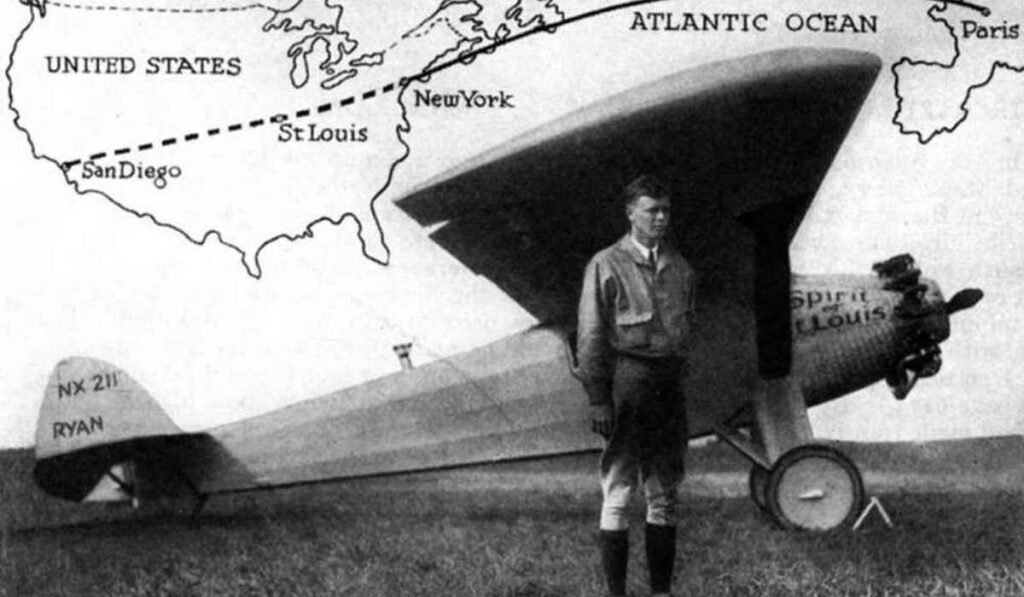
Collaborating closely with engineers at Ryan Aeronautical in San Diego, Charles Lindbergh helped custom-build a revolutionary single-engine monoplane. Every ounce of weight was meticulously evaluated, and non-essential items like a forward-facing windshield were eliminated to maximize fuel capacity and aerodynamic efficiency. He christened this remarkable flying machine the Spirit of St. Louis as a tribute to his financial backers. Rigorous test flights across the American continent proved the aircraft’s incredible endurance and reliability. Through careful preparation and structural innovation, Charles Lindbergh ensured that his machine was fully prepared for the ultimate test.
Setting a Transcontinental Speed Record
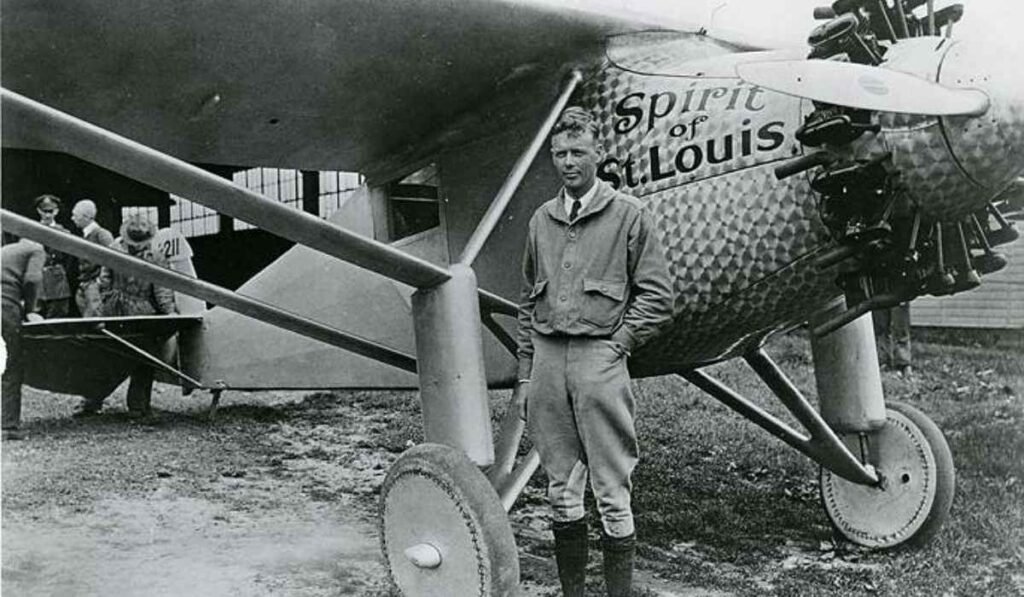
Before attempting the grueling journey across the Atlantic Ocean, Charles Lindbergh wanted to test the long-range capabilities of his newly constructed monoplane. He piloted the Spirit of St. Louis on a swift transcontinental journey from San Diego to New York, stopping briefly in St. Louis along the way. This impressive cross-country flight shattered existing speed records and stunned the American aviation community. Observers marveled at the exceptional efficiency of the aircraft and the calm composure of its young pilot. This successful dry run instilled immense confidence in Charles Lindbergh as he waited anxiously for favorable weather reports at Roosevelt Field.
The Historic Takeoff from Roosevelt Field
On the morning of May 20, 1927, a weary yet deeply focused Charles Lindbergh prepared his heavily loaded monoplane for departure. Muddy fields and overcast skies threatened to trap the overweight aircraft, causing immense anxiety among the gathered spectators. With sheer determination and masterful throttle control, he coaxed the sluggish Spirit of St. Louis into the air, clearing telephone wires by mere feet. Thousands of cheering onlookers watched in awe as the lone aviator vanished into the eastern horizon. This courageous departure marked the official beginning of a legendary voyage that would transform Charles Lindbergh into a global icon.
Navigating the Perils of the Atlantic
Flying entirely alone through thirty-three and a half hours of immense physical and mental strain, Charles Lindbergh faced continuous exhaustion. He battled freezing temperatures, thick fog banks, and treacherous ice accumulation on the wings of his airplane. To combat overwhelming sleep deprivation, he frequently dipped his wheels into heavy mist or kept his side window open to let the biting wind revive him. Relying solely on a magnetic compass, an earth inductor compass, and raw intuition, Charles Lindbergh stayed strictly on course across thousands of miles of empty ocean, demonstrating superhuman resilience.
The Triumphant Landing in Paris
As night fell on May 21, 1927, the low drone of an engine echoed over Le Bourget Field outside Paris, catching an enormous crowd completely by surprise. Charles Lindbergh expertly guided the Spirit of St. Louis down to a smooth landing, instantly surrounded by an ecstatic mob of over one hundred thousand cheering admirers. Pandemonium erupted as ecstatic fans rushed the runway to catch a glimpse of the modest young American who had conquered the Atlantic. Telegraph wires hummed with news of the incredible triumph, ensuring that Charles Lindbergh achieved immediate international immortality and adoration across multiple continents.
Becoming an Instant Global Celebrity
Overnight, Charles Lindbergh transitioned from an obscure airmail pilot into the most famous living human being on the planet. Parades featuring millions of enthusiastic citizens were thrown in his honor across New York, Washington, and major European capitals. World leaders and monarchs lined up to bestow prestigious medals and decorations upon the humble aviator. Despite receiving overwhelming adulation from the public, Charles Lindbergh often felt deeply uncomfortable with intense media scrutiny and invasive public attention. Nevertheless, he utilized his immense platform to promote commercial aviation development and advocate for global air travel expansion.
Promoting Global Aviation and Goodwill Tours
Harnessing his newfound worldwide fame, Charles Lindbergh embarked on extensive diplomatic and goodwill tours across Latin America and the United States. Flying the Spirit of St. Louis to numerous countries, he helped lay the crucial groundwork for international commercial airline routes. His promotional efforts drastically accelerated public acceptance of air travel, sparking a massive worldwide boom in aviation infrastructure and flight training. Working alongside visionary leaders, Charles Lindbergh actively shaped the future of modern transportation, proving that global connectivity was achievable through safe, reliable, and scheduled commercial air carrier networks.
Marriage and a Quiet Partnership with Anne Morrow
In 1929, Charles Lindbergh married Anne Morrow, the brilliant daughter of a prominent U.S. diplomat, forming an extraordinary personal and professional partnership. Anne quickly learned to fly under her husband’s rigorous tutelage, serving as his co-pilot, navigator, and radio operator on numerous daring international expeditions. Together, they charted pioneering transarctic and transatlantic air routes that later became standard commercial flight paths. Beyond aviation, Anne became a celebrated bestselling author and poet, while Charles Lindbergh deeply valued her sharp intellect, editorial guidance, and steadfast companionship through decades of immense public triumph and private tragedy.
Enduring Unimaginable Personal Tragedy
Despite reaching the pinnacle of professional success, Charles Lindbergh and his family suffered an unimaginable tragedy in 1932 when their infant son was kidnapped and murdered. This horrific crime, heavily sensationalized by the global press as the crime of the century, shattered their peaceful existence. Seeking escape from relentless media harassment and intrusive paparazzi, Charles Lindbergh and Anne fled the United States to live quietly in Europe for several years. This devastating loss fundamentally altered his perspective on human nature and public life, causing Charles Lindbergh to retreat further into private scientific pursuits and introspection.
Scientific Innovation and Medical Contributions
Far beyond his accomplishments in the air, Charles Lindbergh possessed a brilliant, inquisitive mind that made significant contributions to medical science. During the 1930s, he partnered with Nobel Prize-winning French surgeon Alexis Carrel at the Rockefeller Institute. Together, they invented an early precursor to the artificial heart—a pioneering perfusion pump designed to keep organs alive outside the body during complex surgeries. This vital medical invention laid the essential technical foundation for modern heart transplants and open-heart surgical procedures. Through this groundbreaking work, Charles Lindbergh proved his exceptional capability as a versatile scientific inventor.
Pre-War Isolationism and Political Controversy
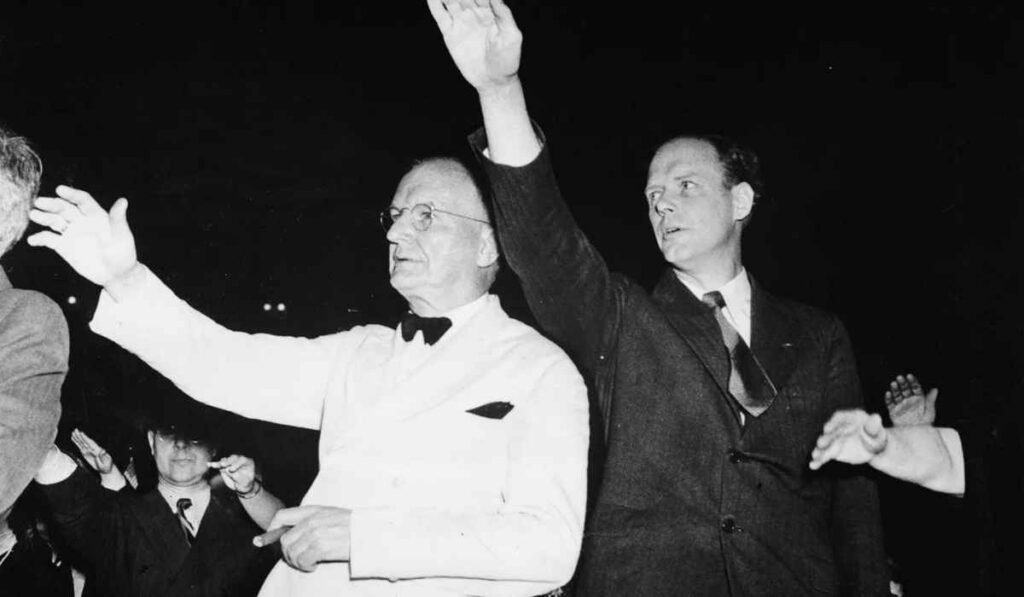
In the years leading up to World War II, Charles Lindbergh traveled to Germany and became an outspoken leader of the America First Committee. He strongly advocated for American military neutrality and isolationism, arguing that the United States should not involve itself in another devastating European conflict. His controversial political speeches and acceptance of a German medal drew fierce public criticism, leading many former admirers to accuse him of harboring anti-Semitic sentiments and fascist sympathies. This turbulent political stance severely tarnished his public image, creating a complex legacy that still haunts historical assessments of Charles Lindbergh today.
Active Participation in World War II
Following the Japanese attack on Pearl Harbor in December 1941, Charles Lindbergh immediately set aside his political differences to support the American war effort. Denied immediate reinstatement in the military due to political opposition from the Roosevelt administration, he worked as a civilian technical consultant for major aircraft manufacturers. He traveled to the Pacific Theater as an aviation advisor, teaching fighter pilots how to radically extend the combat range of twin-engine aircraft like the P-38 Lightning. Displaying immense personal bravery, Charles Lindbergh unofficially flew fifty combat missions and even successfully shot down an enemy aircraft.
Achieving Literary Success and Pulitzer Recognition
In his later years, Charles Lindbergh channeled his reflective nature into writing deeply moving accounts of his pioneering adventures. His autobiographical book The Spirit of St. Louis, published in 1953, offered a breathtaking, hour-by-hour chronicle of his historic transatlantic crossing. Written with extraordinary literary discipline and vivid descriptive power, the book received universal critical acclaim. In 1954, this masterpiece was awarded the prestigious Pulitzer Prize for Biography or Autobiography, cementing Charles Lindbergh’s reputation as a gifted writer capable of capturing the profound philosophical weight of human progress.
Passionate Advocacy for Environmental Conservation
During the final decades of his life, Charles Lindbergh shifted his primary focus toward global environmental conservation and wildlife preservation. Deeply troubled by the ecological consequences of unchecked technological acceleration that he had once helped champion, he became an active conservationist. He worked closely with the World Wildlife Fund to protect endangered species, including humpback whales, blue whales, and Philippine eagles. Traveling extensively through remote wilderness regions, Charles Lindbergh fought tirelessly to safeguard fragile ecosystems and indigenous tribal cultures, demonstrating a profound commitment to protecting the natural world for future generations.
Lasting Legacy and Historical Impact
Charles Lindbergh passed away on August 26, 1974, on the island of Maui, Hawaii, leaving behind a complex, multifaceted legacy. His daring solo flight across the Atlantic forever altered the trajectory of human transportation and ignited a global aerospace revolution. While his political missteps and pre-war isolationism remain subjects of intense historical debate, his contributions to aviation, medical science, literature, and environmental conservation are undeniable. Ultimately, Charles Lindbergh remains a symbol of human ambition, reflecting both the breathtaking heights of modern achievement and the ongoing struggle for moral responsibility.
Frequently Asked Questions
- When did Charles Lindbergh complete his famous transatlantic flight?
- Charles Lindbergh completed his historic solo nonstop flight from New York to Paris on May 20–21, 1927.
- What was the name of the airplane he flew across the Atlantic Ocean?
- He piloted a custom-built single-engine monoplane christened the Spirit of St. Louis.
- Did Charles Lindbergh win any major literary awards later in life?
- Yes, he won the 1954 Pulitzer Prize for Biography or Autobiography for his book The Spirit of St. Louis.
- What scientific invention did he help develop with Alexis Carrel?
- Charles Lindbergh co-invented an early perfusion pump that served as a precursor to the modern artificial heart.
- What caused public controversy regarding his political views before World War II?
- He served as a prominent leader of the America First Committee, advocating strongly for U.S. neutrality and isolationism.