 admin
admin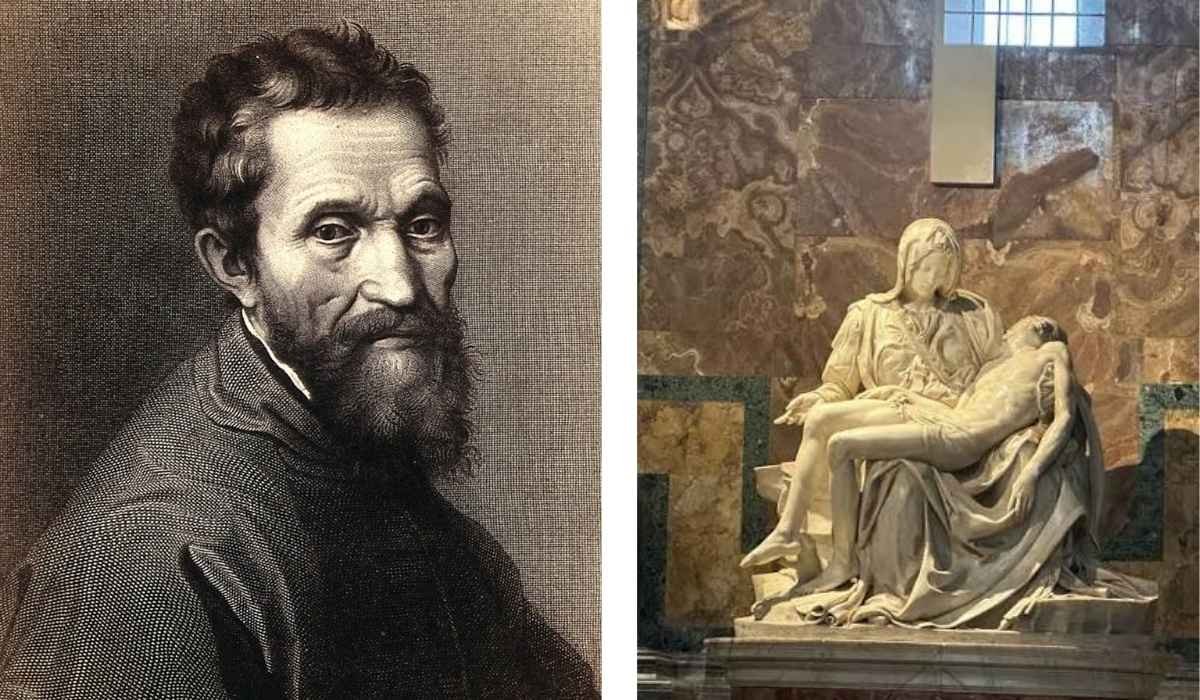
Art history holds few figures as towering and influential as Michelangelo, whose genius redefined sculpture, painting, and architecture during a period of immense cultural rebirth. Born in March 1475 in the quiet Tuscan town of Caprese, this extraordinary creative force demonstrated an early aptitude for stone-carving and visual expression that would eventually captivate popes, princes, and scholars alike. His journey from a rebellious apprentice in Florence to the preeminent master of Rome cemented a legacy defined by tireless dedication, anatomical precision, and unmatched emotional depth. Exploring his multifaceted career reveals how one individual could utterly transform Western visual culture for generations to come.
Quick Bio Overview
| Attribute | Detail |
| Full Name | Michelangelo di Lodovico Buonarroti Simoni |
| Birth Date | March 6, 1475 |
| Death Date | February 18, 1564 |
| Birthplace | Caprese, Republic of Florence |
| Key Disciplines | Sculpture, Painting, Architecture, Poetry |
| Notable Works | Sistine Chapel Ceiling, David, Pietà |
Early Foundations in Florentine Workshops
Growing up amidst the rolling hills of Tuscany, young Michelangelo developed a profound affinity for marble through his early associations with local stonecutters. Relocating to Florence, he bypassed conventional academic schooling to immerse himself in sketching masterworks across local churches. This rebellious artistic hunger eventually secured him an apprenticeship in the bustling workshop of Domenico Ghirlandaio, where he absorbed foundational techniques in fresco painting and composition. Even as a teenager, Michelangelo demonstrated extraordinary raw talent that caught the discerning eye of Lorenzo de’ Medici, propelling him straight into the elite humanist circles governing intellectual life in fifteenth-century Florence.
Patronage Under the Medici Family
The powerful Medici family played an instrumental role in shaping the early career and artistic philosophy of Michelangelo. Living within the Medici palace, the young prodigy gained unprecedented access to an extensive collection of classical antiquities and engaged in deep philosophical debates with leading thinkers. These formative experiences directly influenced early sculptural masterpieces like the Madonna of the Stairs and the Battle of the Centaurs, which showcased his growing command of human anatomy. Although political turmoil occasionally disrupted this patronage, the artistic sensibilities cultivated during these foundational years remained deeply embedded within every monumental creation he undertook throughout his long and productive life.
Moving to Rome and Early Mastery
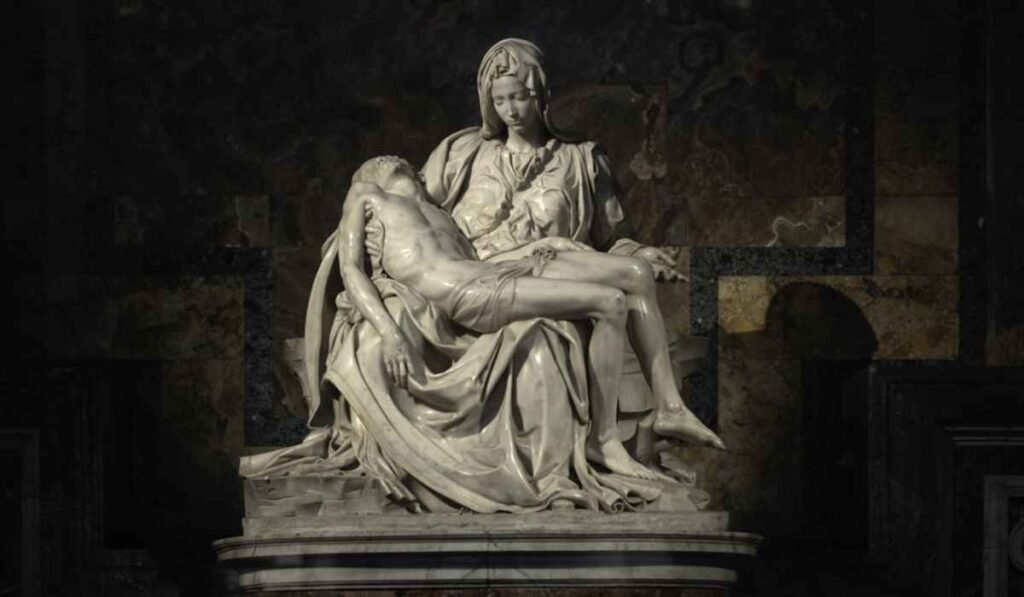
Venturing to the eternal city of Rome in his early twenties marked a major turning point for Michelangelo and his burgeoning professional reputation. Commissioned by a Roman cardinal, he carved the Bacchus, which successfully demonstrated his capability to rival ancient classical sculptors. Shortly thereafter, a French cardinal commissioned the Pietà for St. Peter’s Basilica, a breathtaking marble sculpture depicting the Virgin Mary cradling the deceased body of Jesus. This transcendent work instantly established Michelangelo as a supreme virtuoso, celebrated across Europe for his uncanny ability to render cold, rigid stone into soft, expressive drapery and deeply poignant human emotion.
Carving the Iconic David in Florence
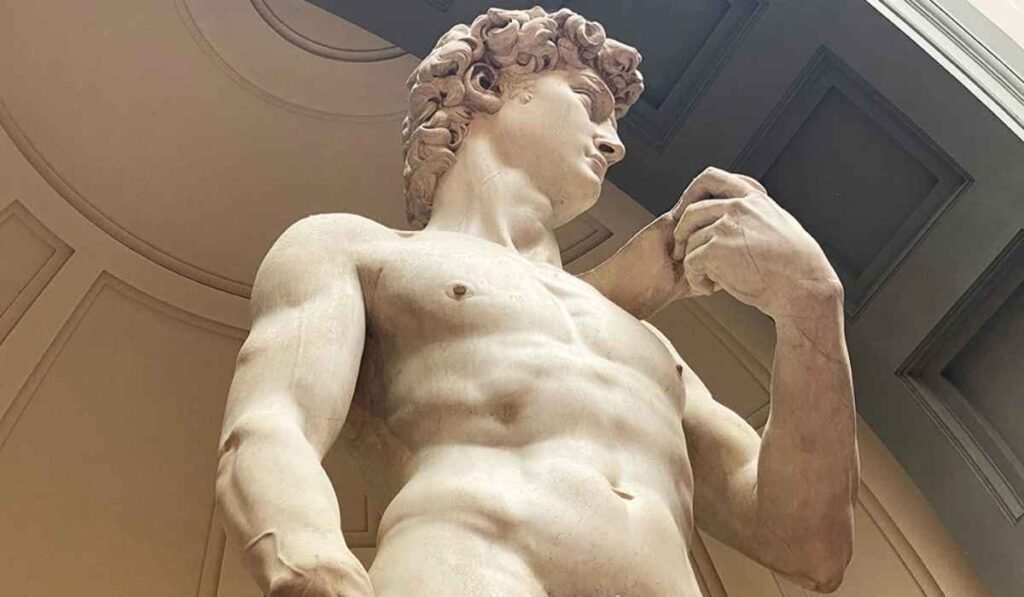
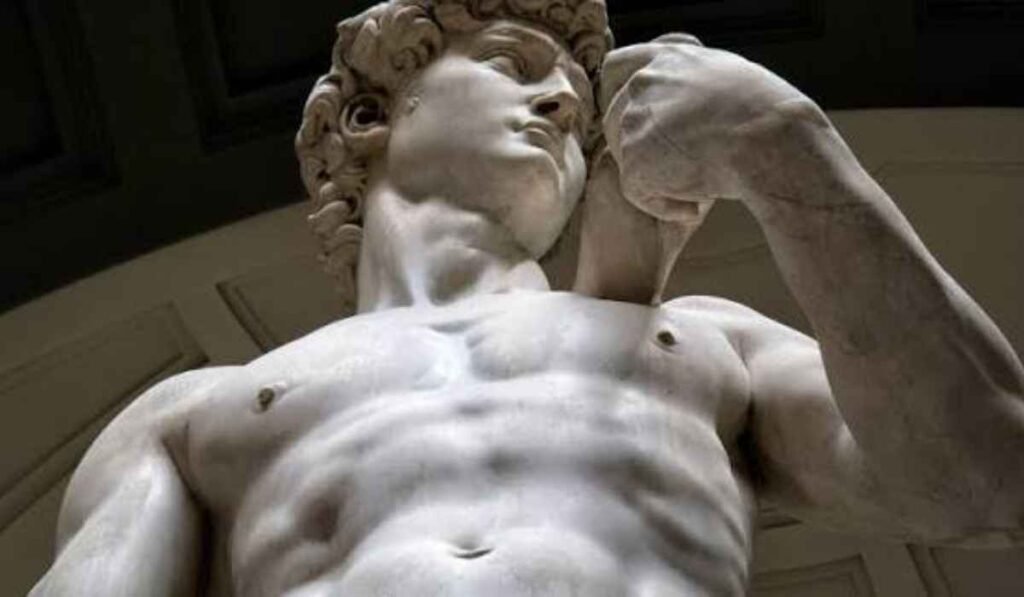
Returning to his beloved Florence at the turn of the century, Michelangelo accepted a commission to transform a massive, flawed block of marble that other artists had previously abandoned. Over three intense years of solitary labor, he coaxed the magnificent figure of David out of the stubborn stone, creating an enduring symbol of civic liberty and youthful strength. Standing over seventeen feet tall, the statue displayed breathtaking anatomical accuracy, from the swollen veins in the hands to the intense, focused gaze of the biblical hero. The triumphant unveiling of David cemented Michelangelo’s status not merely as a talented craftsman, but as an absolute titan of Renaissance sculpture.
Summoned by Pope Julius II
Pope Julius II recognized the unmatched talent of Michelangelo and summoned the artist to Rome to design a colossal, ambitious freestanding tomb. This massive enterprise consumed the sculptor’s thoughts, frustrations, and creative energies for decades through numerous interruptions, revisions, and scale reductions. While the original grand vision for the tomb was never fully realized in its intended scale, the project yielded some of his most striking individual sculptures. Figures like the horned Moses and the struggling captive slaves embodied the psychological intensity and raw power that contemporaries referred to as his characteristic terribilità.
Conquering the Sistine Chapel Ceiling
Reluctantly accepting a daunting painting commission from Pope Julius II, Michelangelo shifted his focus upward to the vast vaulted ceiling of the Sistine Chapel. Despite considering himself primarily a sculptor rather than a painter, he devised an intricate decorative scheme featuring hundreds of biblical figures, prophets, sibyls, and dramatic scenes from Genesis. Working on specialized scaffolding for four grueling years under grueling physical conditions, he perfected innovative fresco techniques that brought extraordinary vibrancy and structural clarity to the vast architectural space. The completed ceiling immediately stunned contemporary observers and remains one of the supreme achievements of human creativity.
Mastering Architectural Innovation Later in Life
As decades passed, Michelangelo increasingly directed his formidable intellect toward architectural design, leaving an indelible imprint on the urban landscape of Rome. He assumed control over the construction of St. Peter’s Basilica, radically streamlining previous blueprints and designing the magnificent soaring dome that still dominates the skyline today. Additionally, his revolutionary plans for the Capitoline Hill and the Laurentian Library introduced playful yet monumental distortions of classical rules that heralded the emergence of Mannerist architecture. These architectural endeavors proved that his spatial imagination was just as potent as his proficiency with a chisel or paintbrush.
Returning to Florence and Political Turmoil
Civil unrest and military conflict frequently disrupted the Italian peninsula, forcing Michelangelo to navigate treacherous political allegiances between rival factions. When republican government was briefly restored in Florence, he patriotically served his home city as designer of fortifications to protect against invading imperial armies. However, the subsequent restoration of Medici rule and oppressive political conditions convinced him to leave Florence permanently during the mid-1530s. Relocating his primary residence to Rome for good, he redirected his remaining energy toward papal projects and personal artistic reflections away from his turbulent hometown.
Painting The Last Judgment on the Altar Wall
Decades after completing the ceiling, Michelangelo returned to the Sistine Chapel to paint The Last Judgment on the massive altar wall. This monumental fresco presented a dramatic, swirling vision of divine judgment filled with muscular, tortured figures that reflected the anxieties of a changing, war-torn Europe. Contemporary critics and church officials debated the propriety of nudity within such a sacred ecclesiastical space, yet the sheer scale and emotional intensity of the composition commanded universal awe. This massive undertaking marked the dramatic culmination of his career as a painter, showcasing a darker, more introspective stylistic evolution.
Exploring Poetry and Inner Philosophy
Beyond his visual creations, Michelangelo maintained a lifelong dedication to writing poetry, producing hundreds of sonnets and madrigals that explored love, mortality, and faith. His verses often revealed a deeply spiritual and melancholic interior life that stood in stark contrast to his public persona as an unyielding creative giant. Addressed frequently to close friends like Vittoria Colonna, these poems provided a safe outlet for expressing theological doubts and emotional vulnerability. Analyzing his literary output allows modern scholars to appreciate the complex intellect fueling his visual masterpieces.
Rivalries with Contemporaries Like Leonardo da Vinci
Fierce professional rivalries characterized the high-stakes artistic environment of Renaissance Italy, most notably between Michelangelo and Leonardo da Vinci. Despite a significant age gap, the two brilliant minds eyed each other with mutual suspicion and sharp competition, famously receiving commissions to paint competing battle murals in the Florentine council hall. While neither mural survived in completed form, these dramatic rivalries pushed both men to push the absolute boundaries of technique and expression. Their competitive dynamic ultimately enriched the cultural landscape, generating some of the most celebrated masterworks in Western history.
The Unique Concept of Terribilità
Art historians frequently apply the term terribilità to describe the overwhelming aura of majesty and emotional intensity radiating from Michelangelo’s creations. This distinct quality reflected his own fiery temperament, perfectionist work ethic, and uncompromising standards regarding artistic execution. Viewers encountering sculptures like Moses or paintings on the Sistine Chapel ceiling often experienced a profound sense of awe mixed with trembling fear before such grand power. This psychological magnitude elevated his art far beyond mere physical representation, touching upon profound spiritual and existential truths that continue to resonate deeply with audiences today.
Late-Life Sculptures and the Pietà Bandini
Into his late eighties, Michelangelo continued working almost obsessively, finding solace and spiritual redemption through physical labor in his studio. During his final years, he focused on deeply personal, uncommissioned sculptures like the Bandini Pietà and the Rondanini Pietà, which stripped away classical perfection in favor of raw, spiritualized expression. Working late into the night with a candle strapped to his cap, he continually hacked away at the marble to reshape the compositions until his final days. These unfinished late sculptures offer an intimate glimpse into an aging master striving to capture the infinite depths of divine grace before passing.
Personal Life and Character Traits
Despite achieving immense fame and accumulating considerable wealth, Michelangelo lived a famously austere, eccentric, and solitary personal existence. He cared little for material luxuries, fine clothing, or social pleasantries, often sleeping in his working clothes and eating meager meals while completely consumed by his craft. Loyal to his extended family in Florence, he channeled large portions of his earnings into supporting relatives and purchasing properties for them. This complex personality combined stubborn independence with deep familial duty, painting a vivid portrait of a man entirely devoted to his singular creative calling.
Historical Documentation and Vasari’s Biography
Uniquely fortunate among Renaissance creators, Michelangelo lived to see his life story documented in great detail by contemporary biographers, most notably Giorgio Vasari. Vasari’s glowing account presented him as the definitive apex of artistic evolution, surpassing all creators from antiquity and modern times alike. Furthermore, the survival of thousands of letters, preliminary sketches, and financial ledgers provides modern researchers with an unparalleled window into his daily struggles and creative process. This wealth of historical material ensures that every phase of his career remains thoroughly scrutinized, celebrated, and understood by contemporary historians.
Death and Burial in Rome and Florence
After a brief illness, Michelangelo passed away in February 1564 at his home in Rome, just weeks before reaching his eighty-ninth birthday. Although initial funeral rites took place in Rome, his body was secretly smuggled back to Florence in compliance with his final wishes to rest in his native soil. A grand public funeral took place in the Basilica of Santa Croce, where artists and dignitaries gathered to honor the passing of Florence’s most celebrated native son. His permanent tomb in Santa Croce stands as a lasting pilgrimage site for admirers seeking to pay homage to the legendary master of the Renaissance.
Enduring Influence on Western Art
The stylistic innovations introduced by Michelangelo established a formidable benchmark that challenged and inspired generations of subsequent Western artists. Painters and sculptors across Europe spent centuries studying his mastery of dynamic movement, anatomical twisting, and monumental scale to improve their own techniques. From Baroque masters like Bernini to later modern creators, the visual vocabulary he pioneered remains a foundational pillar of academic training. His capacity to imbue inanimate materials with breath-taking vitality ensures that his creative footprint remains eternally fresh and universally revered across the globe.
Cultural Legacy in Modern Times
Centuries after his death, the cultural footprint of Michelangelo continues to permeate modern media, literature, tourism, and popular imagination. Millions of international tourists flock annually to Vatican City and Florence to witness his canonical masterpieces firsthand, experiencing the sheer awe of his creations. Educational curricula worldwide highlight his contributions as the quintessential definition of a Renaissance polymath who excelled across multiple demanding disciplines. This ongoing fascination demonstrates that his artistic vision transcends historical boundaries, continuing to speak directly to the human condition across diverse modern eras.
Reflection on a Monumental Career
Reviewing the comprehensive sweep of his lifetime reveals an extraordinary narrative of perseverance, unmatched skill, and profound creative genius. From humble beginnings in the Tuscan countryside to painting the papal chapel and designing monumental domes, his journey epitomizes the absolute height of human achievement. The uncompromising standards he maintained throughout decades of political and personal upheaval left behind a breathtaking treasure trove of cultural artifacts. Ultimately, his monumental life’s work stands as an immortal testament to the boundless possibilities of artistic expression.
Frequently Asked Questions
- When and where was Michelangelo born?
- Michelangelo was born on March 6, 1475, in the small Tuscan town of Caprese, Italy.
- What are his most famous works of art?
- His most celebrated masterpieces include the statue of David, the Pietà, and the Sistine Chapel ceiling frescoes.
- Did Michelangelo consider himself a painter or sculptor?
- He always considered himself primarily a sculptor throughout his entire life, despite executing massive paintings.
- Who were his primary historical patrons?
- He received major commissions from the influential Medici family and various Popes, most notably Julius II.
- Where is Michelangelo buried?
- After dying in Rome, his remains were brought back to Florence for burial in the Basilica of Santa Croce.