
 admin
admin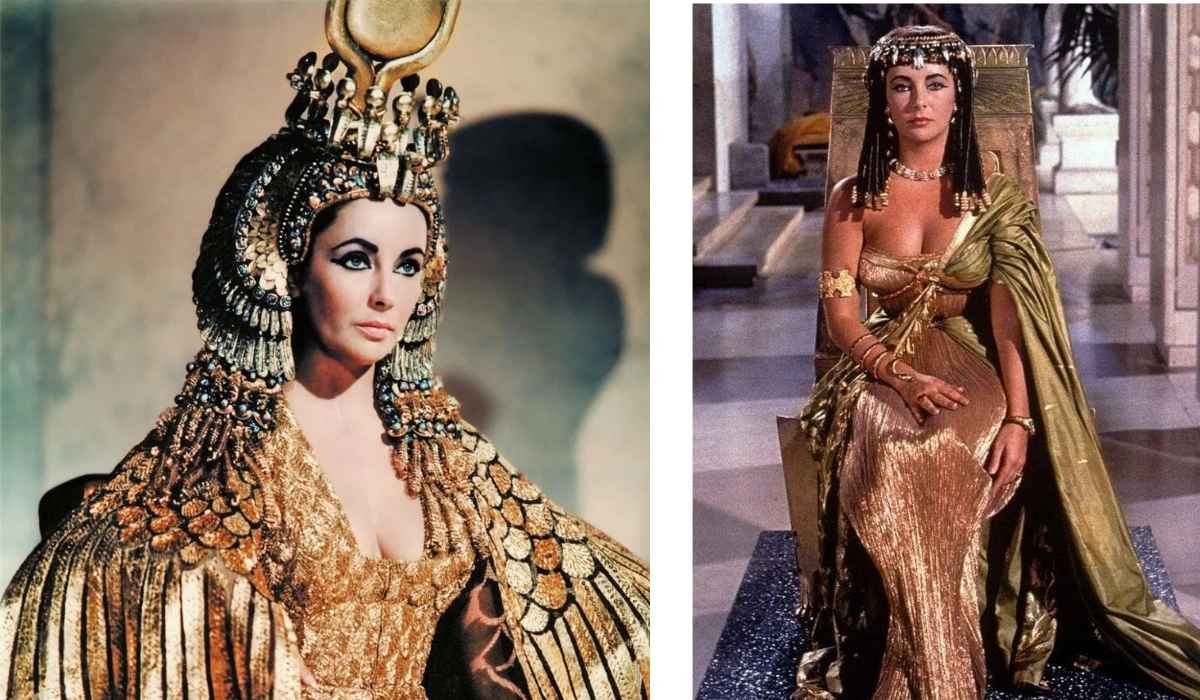
The legendary queen of ancient Egypt remains one of history’s most captivating figures, blending unmatched intellect with fierce political ambition and enduring cultural mystique.
Quick Bio
| Attribute | Detail |
| Name | Cleopatra VII Thea Philopator |
| Born | 69 BC in Alexandria, Egypt |
| Died | August 30 BC in Alexandria, Egypt |
| Dynasty | Ptolemaic Dynasty |
| Role | Last active pharaoh of ancient Egypt |
The Early Life and Royal Heritage
Born in Alexandria during the year 69 BC, Cleopatra was a direct descendant of Ptolemy I Soter, a companion and general of Alexander the Great. Her royal family ruled the Mediterranean nation for centuries following classical conquest, embedding Greek traditions deeply into Egyptian governance. Growing up inside a palace filled with wealth, intrigue, and constant political tension, young Cleopatra developed sharp instincts. She observed her father, Ptolemy XII, struggle against external threats and mounting domestic debt. These formative experiences shaped her understanding of statecraft. Every single challenge she encountered early on prepared her for the immense responsibilities she would soon inherit as the sovereign leader of her vulnerable empire.
Ascension to the Ptolemaic Throne
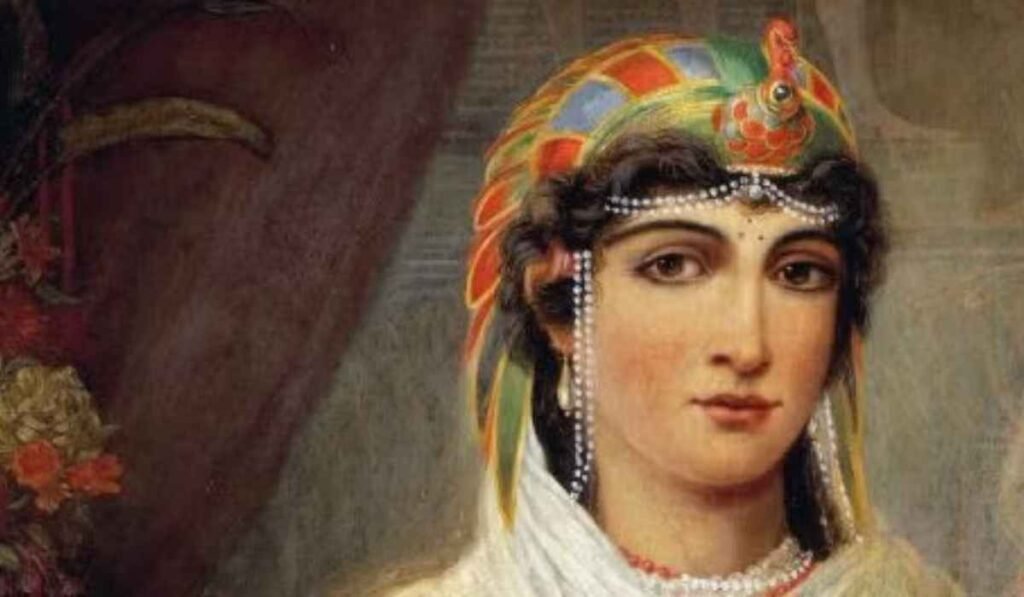
Following the death of her father in 51 BC, Cleopatra officially ascended to power alongside her younger brother, Ptolemy XIII. This joint rule was immediately complicated by bitter rivalries, court corruption, and severe economic strain. Cleopatra quickly realized that sharing authority with a hostile faction would compromise her survival and the stability of the kingdom. To protect her crown, she asserted her dominance, relying on her intellect rather than mere tradition. Internal court factions forced her into a temporary exile, but she refused to surrender her birthright. Gathering loyal supporters outside the capital, she prepared to reclaim her rightful place as the reigning queen through strategic military maneuvering and decisive political calculations.
Mastery of Languages and Diplomacy
Unlike many of her Ptolemaic predecessors who refused to learn the native tongue of their subjects, Cleopatra mastered multiple languages fluently. Historical records indicate she could speak Egyptian, Greek, Aramaic, and several other regional dialects with absolute ease. This linguistic talent allowed her to communicate directly with foreign ambassadors, tribal leaders, and common citizens alike without relying on court translators. Such a skill set was exceptionally rare for a Hellenistic monarch ruling from Alexandria. By bridging the cultural gap between the Greek elite and the indigenous Egyptian population, Cleopatra built a broad base of domestic support and projected immense diplomatic confidence across the entire Mediterranean basin.
Strategic Alliance with Julius Caesar
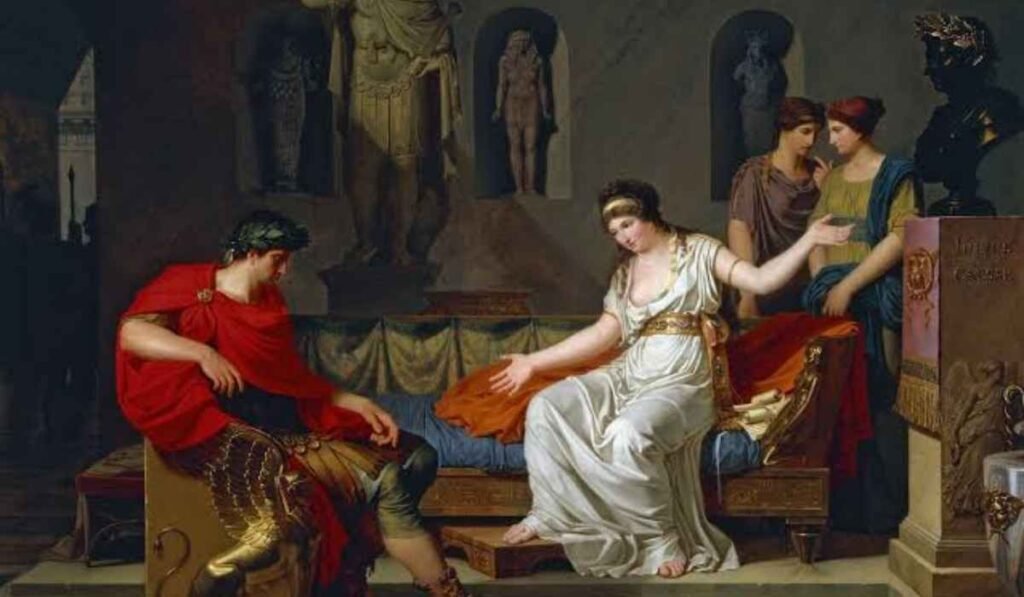
When the Roman general Julius Caesar arrived in Alexandria pursuing his rival Pompey, Cleopatra saw a vital opportunity to secure her throne. Smuggling herself past her brother’s guards to meet Caesar directly, she forged a powerful political and romantic partnership that changed ancient history. Caesar provided the military intervention necessary to defeat her brother’s forces, restoring her undisputed authority over Egypt. In return, Cleopatra supplied Rome with vital grain shipments and financial backing during times of internal crisis. This calculated alliance not only preserved her crown but also guaranteed Egypt’s fragile independence against the ever-expanding shadow of the Roman Republic’s aggressive territorial expansion.
Birth of Caesarion and Roman Scandal
The relationship between the Egyptian queen and the Roman dictator ultimately produced a son named Ptolemy Caesar, affectionately known as Caesarion. When Cleopatra traveled to Rome as Caesar’s guest, her presence caused a massive cultural and political scandal among conservative senators. Many Romans deeply despised foreign influences and feared the monarchical ambitions represented by the queen. Despite the intense hostility from political opponents, Cleopatra maintained her composure and resided in Caesar’s private suburban villa. The birth of Caesarion complicated Roman succession politics, tying the future of Egypt inextricably to the personal ambitions and domestic political survival of Rome’s most powerful military dictator.
The Aftermath of Caesar’s Assassination
The sudden assassination of Julius Caesar in 44 BC dealt a devastating blow to Cleopatra’s grand geopolitical strategy and personal safety. Realizing that Rome had plunged into violent civil chaos and that her life was in immediate danger, she fled Italy and returned safely to Alexandria. Back home, she focused on stabilizing her treasury, managing a severe famine, and protecting young Caesarion’s claim to the throne. The political vacuum left by Caesar divided Rome into warring factions led by his heirs and murderers. Cleopatra watched the unfolding civil war carefully, knowing that whichever Roman faction emerged victorious would eventually demand tribute, loyalty, or military submission from the wealthy kingdom of Egypt.
Fated Encounter with Mark Antony
In 41 BC, Cleopatra was summoned to Tarsus by Mark Antony, one of the primary leaders of the Roman Second Triumvirate. Instead of appearing as a humble petitioner, she arrived in a magnificent barge dressed as the goddess Isis, captivating Antony instantly. This theatrical entrance initiated a legendary romance that combined deep personal affection with massive geopolitical utility. Antony needed Egyptian wealth and military resources to fund his upcoming military campaigns against Parthia, while Cleopatra needed Roman military might to secure her borders. Together, they established a brilliant court in Alexandria, sharing power, luxury, and a mutual vision for dominating the eastern Mediterranean world.
The Donations of Alexandria
The political partnership between Antony and Cleopatra reached a dramatic climax during the public ceremony known as the Donations of Alexandria. In this lavish spectacle, Antony distributed vast Roman and Mediterranean territories to Cleopatra and their three children. Caesarion was officially proclaimed the legitimate son and heir of Julius Caesar, directly challenging the political legitimacy of Octavian in Rome. Octavian utilized this event to paint Antony as a man who had completely abandoned his Roman identity for a foreign queen. This brilliant propaganda campaign turned public opinion in Italy violently against the couple, providing Octavian with the justification he needed to declare total war.
The Decisive Battle of Actium
Military tensions finally erupted on the open seas during the legendary naval clash known as the Battle of Actium in 31 BC. Octavian’s disciplined fleet, commanded by Agrippa, outmaneuvered the combined naval forces of Antony and Cleopatra. Recognizing that the battle was lost, Cleopatra broke through the blockade with her personal squadron and sailed back toward Egypt. Antony soon abandoned the fighting to follow her, effectively sealing the doom of their military campaign. This catastrophic defeat shattered their grand imperial dreams and left Egypt completely exposed to the advancing legions of Octavian, who prepared for a final invasion of the Nile delta.
Tragic Downfall and Final Moments
As Octavian’s forces closed in on Alexandria in 30 BC, both Antony and Cleopatra faced inevitable capture and public humiliation. Believing false news of the queen’s death, Mark Antony committed suicide by falling on his sword. Shortly afterward, Cleopatra was temporarily detained and realized Octavian intended to march her through Rome as a captive in chains. Refusing to suffer such ultimate degradation, the last queen of Egypt chose to end her own life. Whether through toxic poison or a venomous asp bite, her death marked the definitive end of the Ptolemaic dynasty and transformed her into an immortal historical legend.
Roman Propaganda and Historical Legacy
Following her tragic death, Roman historians and poets constructed a largely critical narrative portraying Cleopatra as a dangerous seductress. This hostile bias dominated Western literature, art, and philosophy for centuries, overshadowing her genuine administrative achievements and diplomatic brilliance. Modern scholarship, however, has successfully reevaluated her reign, highlighting her extraordinary intellect, linguistic talents, and fierce dedication to her country. She is now recognized not merely as a romantic figure, but as a master strategist who successfully preserved her kingdom’s sovereignty against overwhelming imperial odds until the very end of her extraordinary life.
Cultural Impact in Art and Literature
The dramatic life story of Cleopatra has inspired countless artistic masterpieces, theatrical plays, poems, and cinematic adaptations across generations. From William Shakespeare’s famous tragedy Antony and Cleopatra to Hollywood blockbusters, her persona remains synonymous with power, beauty, and tragedy. Artists across different eras have used her image to explore themes of female agency, political ambition, and cross-cultural romance. This enduring fascination ensures that her name survives vividly in global popular culture. Every modern retelling re-examines the complex layers of her personality, proving that her cultural impact extends far beyond the borders of ancient Alexandria.
Economic Management of the Kingdom
Beyond her dramatic romances, Cleopatra was an exceptionally capable administrator who actively managed Egypt’s complex internal economy. She reformed the national taxation system, regulated grain distribution during periods of drought, and stabilized the royal currency to combat inflation. Her economic policies ensured that Alexandria remained the premier commercial and intellectual hub of the ancient Mediterranean world. By fostering international trade and maintaining strong fiscal discipline, she generated the immense revenues required to fund her military campaigns and diplomatic initiatives. Her economic acumen frequently gets overlooked in favor of her personal life, yet it formed the absolute bedrock of her political power.
Religious Patronage and Divine Identity
Cleopatra understood the immense power of religious symbolism, frequently aligning herself with ancient Egyptian deities like Isis during state ceremonies. By presenting herself as a living goddess, she successfully bridged the spiritual gap between the Greek ruling class and native religious priests. This careful religious patronage secured the loyalty of powerful temple hierarchies throughout the Nile Valley. Her coronation at Memphis followed ancient traditions meticulously, reinforcing her legitimacy as a true pharaoh rather than a foreign conqueror. This calculated divine identity allowed her to command deep reverence and loyalty from her subjects even during times of severe geopolitical crisis.
The Mystery Surrounding Her Tomb
Despite centuries of intense archaeological investigation, the exact location of Cleopatra and Mark Antony’s joint tomb remains one of history’s greatest unsolved mysteries. Ancient writers suggested they were buried together in a magnificent monument near the temple of Isis in Alexandria, parts of which may now lie underwater. Modern marine archaeologists and historians continue excavating coastal sites and ancient ruins in hopes of uncovering her final resting place. Finding her tomb would provide unprecedented insights into her life, death, and the material culture of Ptolemaic Egypt. Until that discovery happens, the burial site of the famous queen remains shrouded in complete secrecy.
The Fate of Her Surviving Children
After the tragic deaths of their parents, Cleopatra’s surviving children were taken to Rome by Octavian to be paraded in his public triumph. They were placed under the care of Octavia, Mark Antony’s former wife and Octavian’s sister, who raised them with remarkable kindness. Cleopatra Selene, her only surviving daughter, eventually married King Juba II of Mauretania, becoming a powerful queen in her own right and promoting Hellenistic culture in North Africa. The fate of Caesarion, however, was far more tragic, as Octavian ordered his execution shortly after capturing Alexandria to eliminate any rival claimants to the imperial Roman throne.
Comparative Analysis with Prior Rulers
When compared to her predecessors within the Ptolemaic dynasty, Cleopatra stands out as uniquely dedicated to the survival of the Egyptian state. While many earlier kings and queens engaged in self-destructive civil wars and neglected governance, she actively pursued progressive reforms and foreign alliances. Her ability to command respect from legendary Roman leaders like Julius Caesar and Mark Antony demonstrated a level of political equality rarely achieved by contemporary monarchs. She transformed Egypt from a failing client state into a major geopolitical player, proving herself vastly superior in intellect and ambition to the weak rulers who preceded her.
Modern Historiography and Historical Revisionism
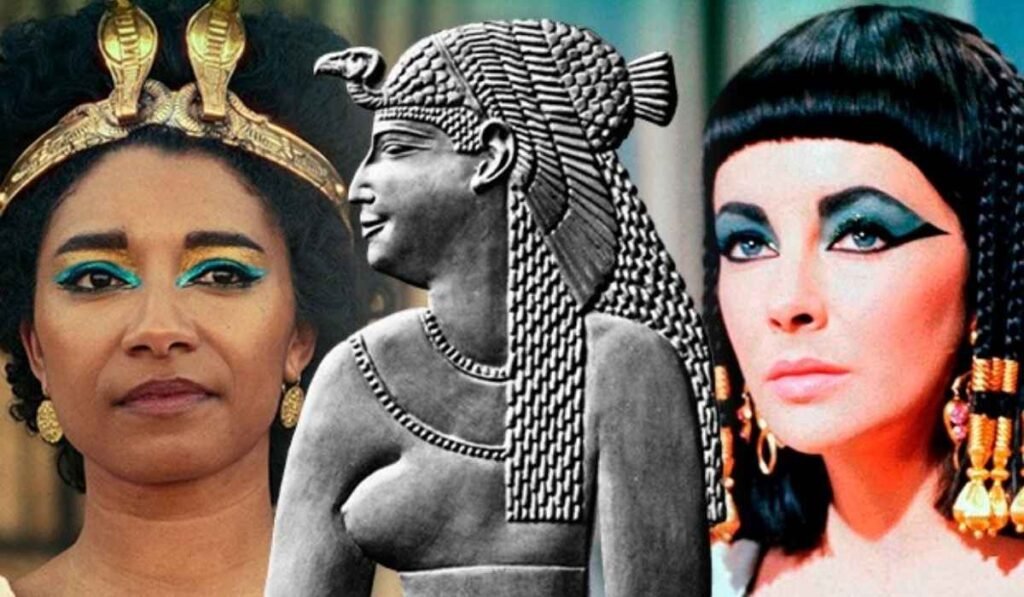
Recent historical analysis has worked hard to strip away centuries of sexist Roman propaganda that unfairly reduced Cleopatra to a manipulative femme fatale. Scholars today examine her actions through the lens of pragmatic survival in a ruthless, male-dominated ancient political landscape. This revisionist perspective acknowledges her exceptional education, her administrative brilliance, and her unwavering defense of Egyptian sovereignty. By looking past the romantic myths, historians now present a much more accurate portrait of a brilliant stateswoman who fought valiantly to protect her empire until her final breath.
The Enduring Mystique of the Queen
The legacy of Cleopatra continues to fascinate millions of people worldwide, cementing her status as an eternal icon of power, intelligence, and tragedy. Her ability to manipulate the greatest political forces of her era while maintaining a vibrant cultural center in Alexandria ensures her place among history’s greatest leaders. Even millennia after her death, debates over her life, her choices, and her appearance capture the global imagination. She remains the definitive symbol of ancient majesty, a ruler who chose death over captivity and whose remarkable story continues to shape our understanding of the ancient world.
FAQs
- When was Cleopatra born?
- Cleopatra was born in 69 BC in Alexandria, Egypt.
- Who were Cleopatra’s most famous Roman allies?
- Her most famous political and romantic partners were Julius Caesar and Mark Antony.
- How did Cleopatra die?
- She died by suicide in 30 BC, reportedly using poison or a venomous bite to avoid Roman captivity.
- What languages could Cleopatra speak?
- She was fluent in multiple languages, including Egyptian, Greek, and Aramaic.
- Why is Cleopatra considered the last pharaoh?
- She was the final active ruler of the Ptolemaic Kingdom before Egypt was annexed by the Roman Empire.