 admin
admin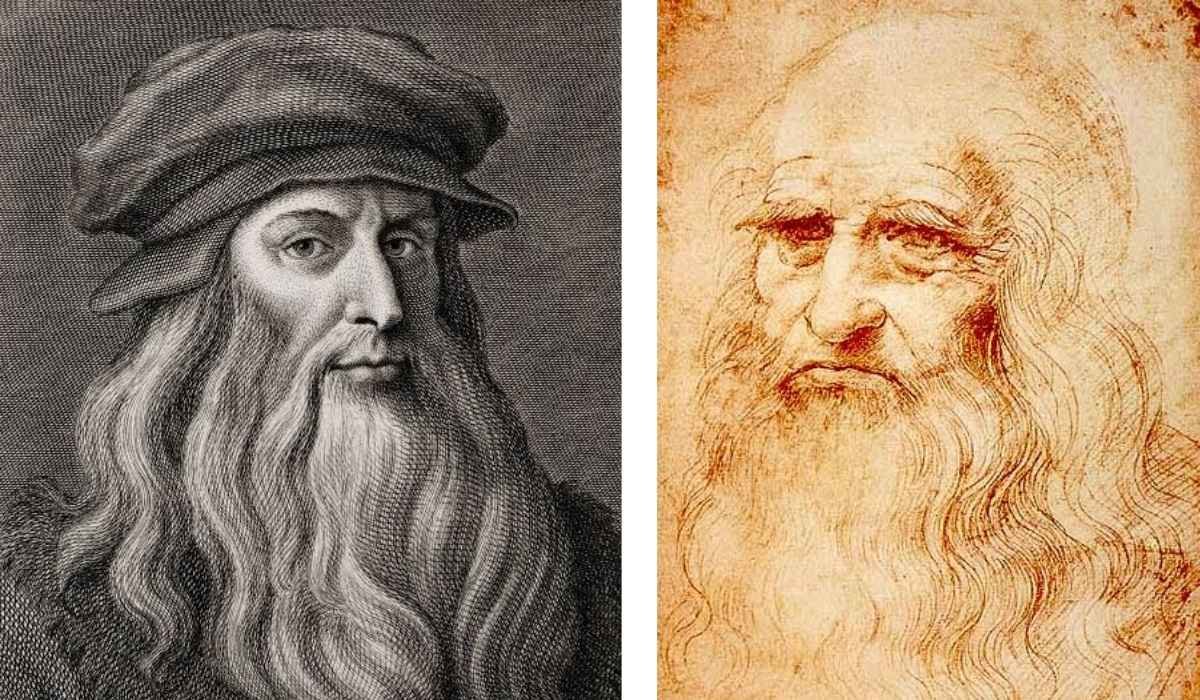
Leonardo da Vinci was born in the small Tuscan hill town of Vinci, where his early childhood was spent exploring the natural beauty of the local landscape. His father, a respected legal notary, eventually recognized his exceptional creative talents and apprenticed him to the prominent Florentine artist Andrea del Verrocchio. During this intensive period of studio training, Leonardo mastered various technical disciplines, including drafting, chemistry, metallurgy, and sculpture, while interacting with other notable creators. The young apprentice quickly displayed an astonishing intellect and an insatiable curiosity about the physical world, setting the stage for a lifetime of extraordinary multidisciplinary achievements that would forever alter European culture. Leonardo Da Vinci remains a globally celebrated symbol of human potential.
Quick Bio
| Attribute | Detail |
| Full Name | Leonardo di ser Piero da Vinci |
| Birth Date | April 15, 1452 |
| Birth Place | Vinci, Republic of Florence |
| Death Date | May 2, 1519 (Aged 67) |
| Death Place | Clos Lucé, Amboise, France |
| Occupation | Painter, scientist, engineer, architect |
| Known For | Mona Lisa, The Last Supper, notebooks |
Early Life and Family Background in Vinci
Growing up in the rolling hills of Tuscany provided the young visionary with an intimate connection to the natural environment. His father, Ser Piero, ensured that he received a basic education in reading, writing, and mathematics, though his artistic inclinations clearly superseded formal academic studies. Even as a young boy, he spent countless hours observing geological formations, botanical specimens, and the flight patterns of local birds. These formative experiences cultivated a deep observational habit that heavily influenced his later artistic creations and scientific inquiries. Leonardo Da Vinci developed a unique worldview rooted in empirical observation and direct engagement with physical reality rather than abstract scholastic dogma.
Apprenticeship under Andrea del Verrocchio in Florence
Moving to Florence placed the aspiring creator right at the beating heart of the Italian Renaissance and its vibrant cultural movement. Entering the bustling workshop of Andrea del Verrocchio exposed him to rigorous technical instruction and collaborative artistic projects alongside other famous apprentices. He learned how to mix pigments, cast metals, prepare panels, and render human anatomy with convincing three-dimensional volume and delicate tonal gradations. His exceptional skill soon surpassed that of many peers, earning the admiration of his master and local patrons alike. Leonardo Da Vinci absorbed every available lesson from this creative crucible, establishing an unyielding foundation for his future masterpieces.
The Artistic Masterpieces of the Early Period
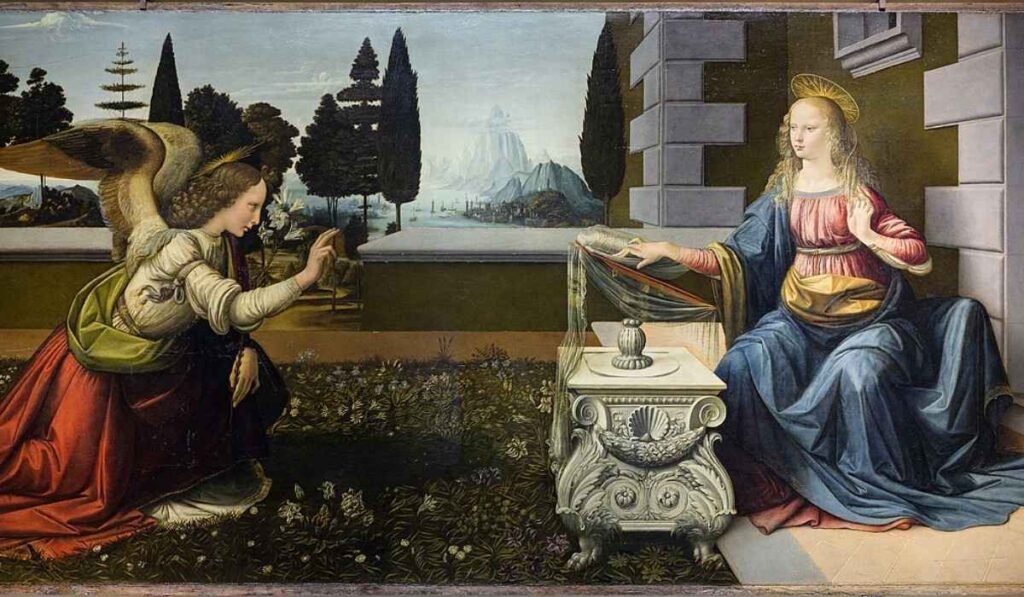
Establishing his independent career brought numerous prestigious commissions for religious altarpieces, devotional panels, and secular portraiture across Florence. Works like the Annunciation and the portrait of Ginevra de Benci demonstrated his innovative approach to composition, atmospheric perspective, and psychological depth. He experimented boldly with oil and tempera mediums, striving to capture the subtle interplay of light and shadow across organic surfaces. These early creations revealed a maturing intellect that refused to rely entirely on traditional workshop conventions, preferring instead to innovate constantly. Leonardo Da Vinci infused each painted canvas with a vibrant sense of life, movement, and intellectual rigor that astonished contemporary observers.
Service to Ludovico Sforza in Milan
Relocating to Milan marked a major turning point in his professional trajectory as he entered the service of Duke Ludovico Sforza. For nearly two decades, he served as a court artist, theatrical producer, military engineer, and architectural consultant for the Sforza household. This versatile role allowed him to channel his diverse interests into practical engineering projects, grand pageants, and monumental sculptural proposals. Although his massive bronze equestrian monument was never fully cast due to impending warfare, his reputation as a supreme polymath flourished. Leonardo Da Vinci embraced this period of intense productivity to expand his investigations into geometry, mechanics, and human anatomy.
Painting the Last Supper in Milan
Commissioned by the Dominican friars of Santa Maria delle Grazie, the monumental mural of the Last Supper became an undisputed masterpiece of Western art. Choosing to depict the dramatic moment immediately after Christ announces that one of his disciples will betray him, he captured distinct psychological reactions. He experimented with an experimental tempera and oil mixture directly on dry plaster, a technical choice that unfortunately led to rapid physical deterioration over subsequent centuries. Despite preservation challenges, the brilliant perspective lines, emotional intensity, and compositional harmony continue to mesmerize art historians and visitors worldwide. Leonardo Da Vinci revolutionized narrative painting through his profound understanding of human emotion and spatial geometry.
Scientific Studies and Anatomical Investigations
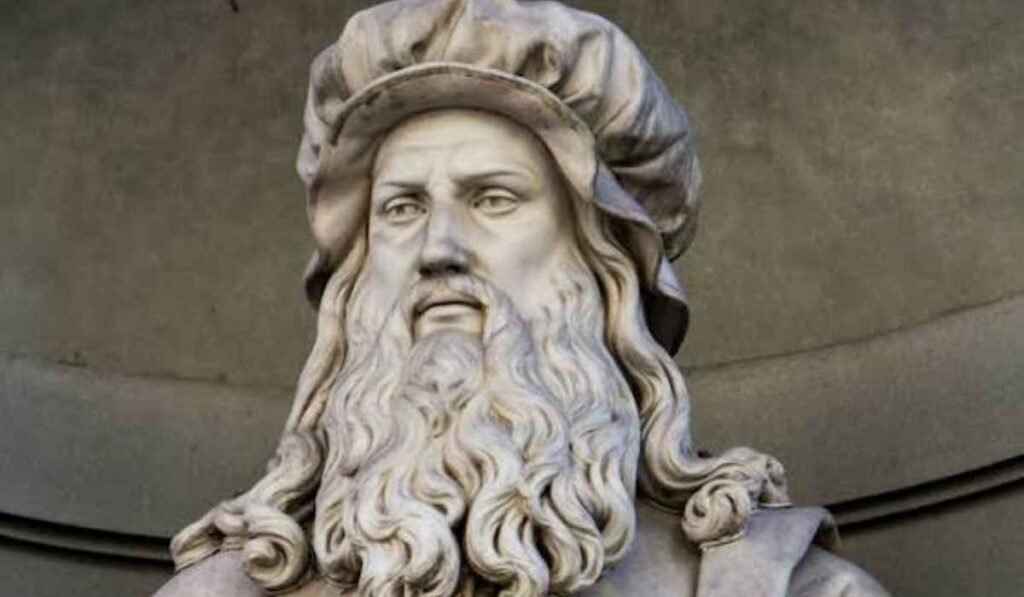
Deepening his quest to understand the underlying mechanics of nature, he embarked on exhaustive anatomical dissections of human and animal bodies. Working alongside anatomists in hospitals, he produced hundreds of remarkably accurate drawings detailing muscles, bones, vascular systems, and internal organs. These meticulous illustrations were accompanied by mirror-written notes that investigated optics, hydrodynamics, botany, and the physics of gravity. He viewed art and science as mutually reinforcing disciplines, believing that a true painter must comprehend the underlying structure of reality. Leonardo Da Vinci elevated empirical observation into a rigorous art form through his extensive scientific notebooks.
The Creation of the Mona Lisa
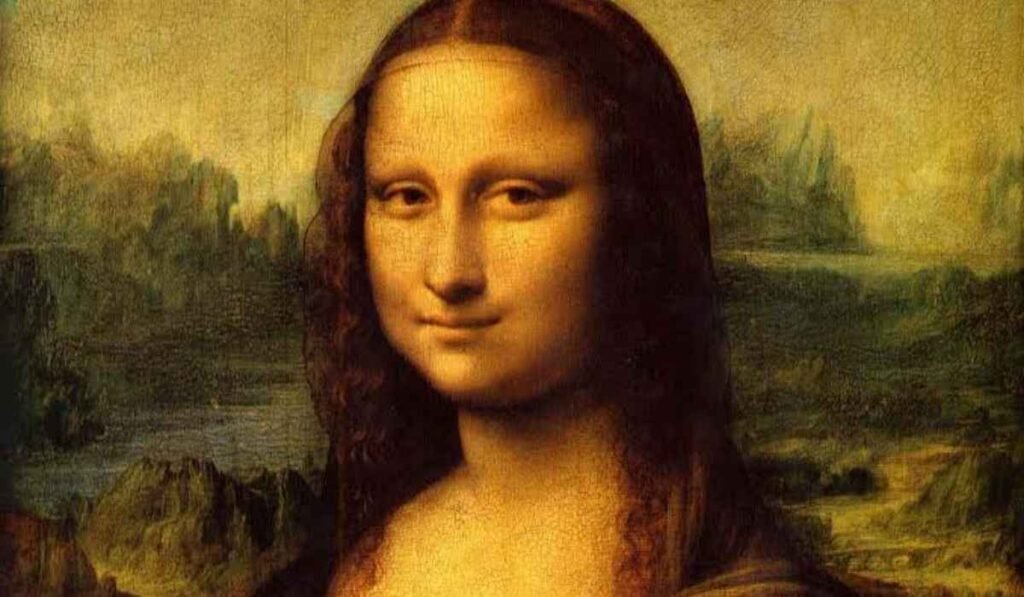
Beginning around the turn of the sixteenth century, he commenced work on the portrait that would eventually become the most famous painting in human history. The portrait of Lisa Gherardini showcases his signature sfumato technique, a method of layering translucent glazes to eliminate harsh outlines and create lifelike smokey transitions. The enigmatic smile and the mesmerizing, hazy background landscape have sparked endless debate, psychological analysis, and cultural commentary across centuries. He carried this beloved panel with him through various travels, continually refining its details until his final years in France. Leonardo Da Vinci achieved an unprecedented level of psychological realism and atmospheric subtlety within this iconic masterpiece.
Architectural Designs and Urban Planning
Beyond painting and anatomy, his brilliant mind frequently turned toward the conceptualization of advanced architectural structures, fortifications, and utopian city layouts. He envisioned multi-level cities featuring segregated pedestrian and vehicular traffic, canal systems for sanitation, and reinforced defensive walls designed to withstand artillery bombardments. His architectural sketches integrated geometric symmetry with practical functionality, reflecting a deep concern for human health, efficiency, and safety. Although many of these ambitious blueprints remained unbuilt, they anticipated modern urban planning principles by several centuries. Leonardo Da Vinci proved that his visionary imagination extended far beyond canvas and pigment into the physical infrastructure of civilization.
Engineering Inventions and Mechanical Innovations
His comprehensive notebooks are filled with visionary sketches of mechanical devices that anticipated modern industrial technology by hundreds of years. Among his conceptual inventions were armored fighting vehicles, flying machines based on bird wings, hydraulic pumps, excavators, and pivoting cranes. While some designs were constrained by the primitive power sources and materials available during the fifteenth century, others demonstrated profound mechanical understanding. He meticulously analyzed gears, levers, pulleys, and friction to optimize power transmission across various complex apparatuses. Leonardo Da Vinci channeled his mechanical genius into inventing practical solutions for manufacturing, warfare, transportation, and scientific research.
Studies in Flight and Aviation Pioneers
Obsessed with the mechanics of avian locomotion, he spent decades observing birds, bats, and insects to unlock the secrets of controlled aerial flight. He designed numerous ornithopters, aerial screws, parachutes, and gliding wings, testing their aerodynamic properties through small-scale paper and wooden models. His rigorous notes on air resistance, wind currents, and center of gravity laid theoretical groundwork for early aviation pioneers centuries later. While human muscle power proved insufficient to lift his heavy mechanical wings, the conceptual framework was breathtakingly original. Leonardo Da Vinci envisioned a future where humanity could conquer the skies through careful study of natural aerodynamic principles.
Cartography and Geological Observations
His extensive travels across Italy provided ample opportunity to survey landscapes, map river basins, and study fossilized marine remains embedded in high mountains. Challenging contemporary religious dogmas, he correctly deduced that sedimentary rock layers containing fossils had formed gradually over vast epochs beneath ancient seas. He also created remarkably accurate topographical maps of the Arno River valley and various military territories using advanced surveying techniques. These geographical and geological studies highlighted his commitment to understanding Earth’s dynamic history through direct physical evidence. Leonardo Da Vinci combined artistic draftsmanship with rigorous scientific cartography to map the physical terrain with unprecedented precision.
Return to Florence and Later Artistic Projects
Returning to Florence during a turbulent political climate, he engaged in various high-profile artistic rivalries and municipal assignments, including a planned mural for the Palazzo Vecchio. During this phase, he also explored scientific inquiries ranging from geometry to optics, constantly shifting his focus between different intellectual pursuits. His perfectionism and chronic procrastination frequently frustrated patrons, yet his reputation as an unrivaled intellectual giant remained completely secure throughout Italy. He mentored younger artists and gathered loyal disciples who absorbed his unique techniques and philosophical approach to creation. Leonardo Da Vinci continued to push the boundaries of visual representation and intellectual exploration amidst shifting political alliances.
Time in Rome and Connections with the Papacy
Later in his career, he traveled to Rome under the patronage of Giuliano de Medici, residing within the Vatican and engaging in scientific experiments. In Rome, he studied botanical specimens in the Vatican gardens, investigated concave mirrors for solar energy concentration, and pursued mathematical puzzles. However, his output of major paintings slowed significantly as his interests grew increasingly focused on natural philosophy, geometry, and anatomical mechanics. Although he felt somewhat isolated among younger masters like Raphael and Michelangelo who dominated the Roman art scene, he remained deeply respected. Leonardo Da Vinci used his time in Rome to synthesize his lifetime of observations into comprehensive theoretical treatises.
Relocation to France and Final Years
Accepting a generous invitation from King Francis I, he spent the final years of his life residing at the Clos Lucé manor near Amboise in France. The French monarch treated him with immense reverence, bestowing upon him the title of premier painter, engineer, and architect to the king. Free from financial pressures, he spent his peaceful twilight years organizing his massive collection of manuscripts, consulting on royal engineering projects, and enjoying stimulating philosophical conversations. Local legend and romanticized historical accounts suggest that the king frequently visited his aging friend to discuss art and science. Leonardo Da Vinci found in France a welcoming sanctuary that honored his genius until his peaceful passing.
Death, Burial, and Immediate Historical Impact
Passing away on May 2, 1519, at the Clos Lucé manor, he left behind a legendary legacy that profoundly shaped the trajectory of Western civilization. In accordance with his final wishes, he was buried within the Chapel of Saint-Hubert at the Château d’Amboise in the Loire Valley. Following his death, his loyal student Francesco Melzi inherited his vast collection of notebooks, drawings, and personal papers, preserving them for posterity. Although many of his scientific manuscripts remained unpublished and scattered for centuries, his published artistic achievements cemented his immortality. Leonardo Da Vinci passed into history as the ultimate embodiment of Renaissance humanism, curiosity, and creative mastery.
Rediscovery and Modern Appreciation of His Notebooks
For centuries after his death, the true magnitude of his scientific intellect remained largely hidden because his mirror-written notebooks were dispersed among various private collectors. As these remarkable manuscripts gradually resurfaced in public libraries and archives across Europe, scholars began translating and publishing his groundbreaking scientific observations. Modern researchers expressed astonishment at his accurate anatomical drawings, advanced engineering concepts, and prescient ecological insights. Exhibitions of his reconstructed models and original folios now draw millions of visitors to museums worldwide every single year. Leonardo Da Vinci is celebrated today not merely as a master painter, but as a universal genius whose mind was centuries ahead of his time.
The Cultural Mythos of the Renaissance Man
Over the centuries following his demise, his persona evolved into the archetypal definition of the “Renaissance Man”—someone possessing expertise across countless disparate disciplines. Cultural historians, writers, and filmmakers continually revisit his life, analyzing every surviving brushstroke and journal entry for hidden meanings and psychological clues. This enduring fascination demonstrates how deeply his achievements resonate with humanity’s ongoing quest for knowledge, beauty, and technological progress. Educational institutions and innovation centers frequently invoke his name as the ultimate symbol of interdisciplinary thinking and unbridled creativity. Leonardo Da Vinci transcends historical categorization, remaining a perennial source of inspiration for dreamers, scientists, and artists across the globe.
Preservation and Conservation of Surviving Works
Protecting his fragile paintings and delicate paper manuscripts from environmental degradation has become a monumental task for modern museum conservators and scientists. Advanced imaging technologies, non-invasive spectroscopic analysis, and climate-controlled display cases are routinely deployed to safeguard masterpieces like the Mona Lisa and fragile notebook folios. Art historians collaborate closely with chemists and physicists to understand his original material compositions and prevent further decay caused by aging pigments. These rigorous conservation efforts ensure that future generations can continue to study and appreciate his physical creations up close. Leonardo Da Vinci left behind treasures that demand exceptional care and international cooperation to survive into the distant future.
Eternal Legacy in Art, Science, and Culture
Looking across the vast expanse of human history, few individuals have left an imprint as indelible and multifaceted as the Tuscan master. His seamless fusion of artistic sensitivity with empirical scientific inquiry demonstrated that imagination and reason are powerful complementary forces. From iconic paintings that capture the subtle depths of human emotion to visionary engineering blueprints that foreshadowed modern technology, his contributions remain monumental. The global appreciation for his genius continues to expand as new generations uncover fresh layers of meaning within his staggering oeuvre. Leonardo Da Vinci will forever remain an immortal beacon of intellectual curiosity, creative excellence, and human achievement.
Frequently Asked Questions
- Q: When and where was Leonardo da Vinci born?
- A: Leonardo da Vinci was born on April 15, 1452, in the Tuscan hill town of Vinci, Republic of Florence.
- Q: What are Leonardo da Vinci’s most famous paintings?
- A: His most famous paintings are the Mona Lisa and The Last Supper.
- Q: Did Leonardo da Vinci receive a formal university education?
- A: No, he received only a basic informal education and was largely self-taught through practical apprenticeship and observation.
- Q: What innovative painting technique is Leonardo famous for developing?
- A: He is famous for developing the sfumato technique, which creates soft, imperceptible transitions between colors and tones.
- Q: Where did Leonardo da Vinci spend the final years of his life?
- A: He spent his final years in France at the Clos Lucé manor under the patronage of King Francis I.