 admin
admin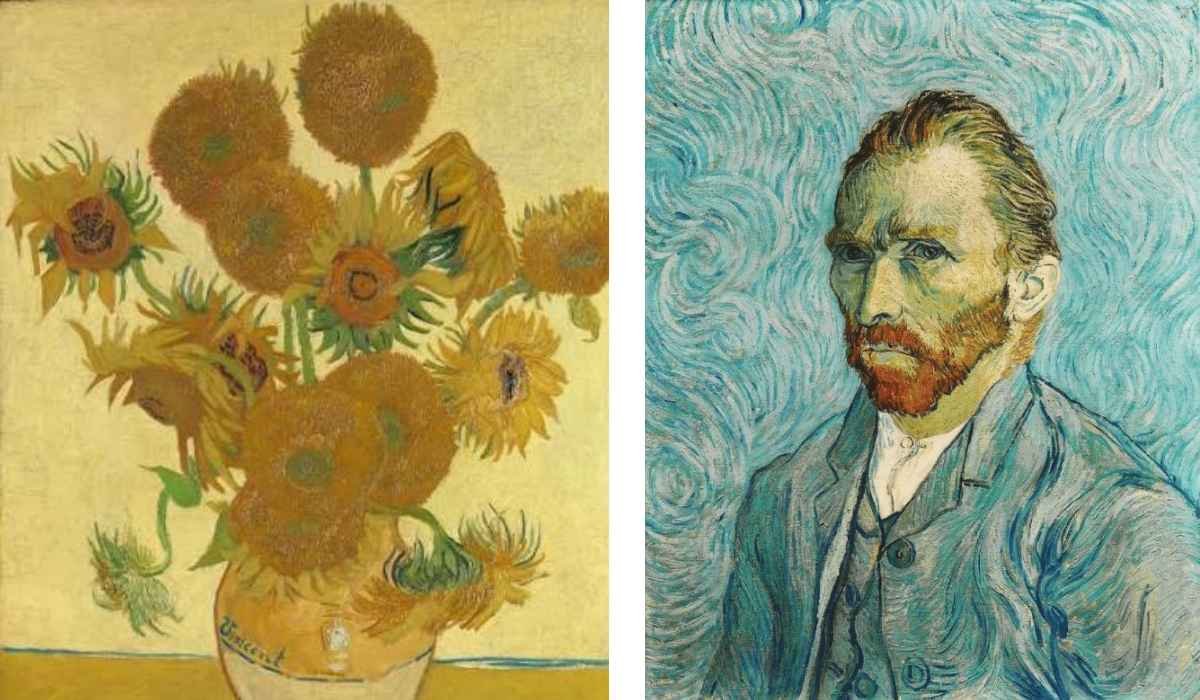
The artistic journey of Vincent van Gogh remains one of the most compelling narratives in the history of Western art, marked by intense emotional depth, vibrant colors, and revolutionary brushwork that changed creative expression forever. Born in the Netherlands, he initially struggled through various vocations before dedicating his life fully to painting during his late twenties. Although he faced profound personal adversity, poverty, and mental health struggles throughout his brief decade-long career, his visionary output laid the essential groundwork for modern expressionism. Today, his iconic canvases continue to captivate global audiences, commanding immense appreciation and symbolizing the ultimate triumph of creative passion over relentless human suffering.
Quick Bio
| Attribute | Detail |
| Full Name | Vincent Willem van Gogh |
| Birth Date | March 30, 1853 |
| Birth Place | Zundert, Netherlands |
| Death Date | July 29, 1890 |
| Notable Works | The Starry Night, Sunflowers, The Potato Eaters |
| Movement | Post-Impressionism |
Early Childhood Years in the Dutch Countryside
Growing up in a modest Protestant household in Groot-Zundert shaped the early worldview of Vincent van Gogh. His father served as a local village minister, instilling strict moral values and a profound sense of duty within the family dynamic. Young Vincent spent long hours wandering through rural landscapes, developing an early appreciation for nature that would later anchor his visual themes. Education came primarily from home tutors before attending boarding schools where he often experienced profound feelings of isolation. These formative experiences cultivated a sensitive, introspective personality that consistently sought deeper meaning, connection, and spiritual purpose in everyday surroundings.
Working as a Young Art Dealer in Europe
Stepping into the professional world at age sixteen, Vincent van Gogh joined his uncle’s firm, Goupil and Company, as an aspiring art dealer. This position required traveling between international branches, exposing him directly to contemporary European masterpieces and commercial gallery operations. He performed reasonably well during his initial years in The Hague and later London, where he developed a deep appreciation for British culture and literature. However, witnessing how fine art was commodified gradually disillusioned him. His growing disdain for commercial transactions eventually strained professional relationships, leading to his eventual dismissal and forcing a complete redirection of his life’s professional trajectory.
Seeking Spiritual Calling Through Religious Mission Work
Experiencing a deep personal crisis following his departure from the art market, Vincent van Gogh turned intensely toward religious devotion. He attempted to follow in his father’s footsteps by pursuing theology and working voluntarily as a lay preacher among impoverished coal miners in the Borinage region of Belgium. Living in extreme poverty alongside the destitute laborers, he dedicated himself entirely to nursing the sick and comforting the afflicted. Church authorities ultimately dismissed him for overzealousness, leaving him devastated and questioning his place in society. Yet, witnessing the harsh reality of human suffering provided Vincent van Gogh with profound empathy for ordinary working-class people, profoundly influencing his artistic vision.
Transitioning From Humble Sketches to Serious Drawing
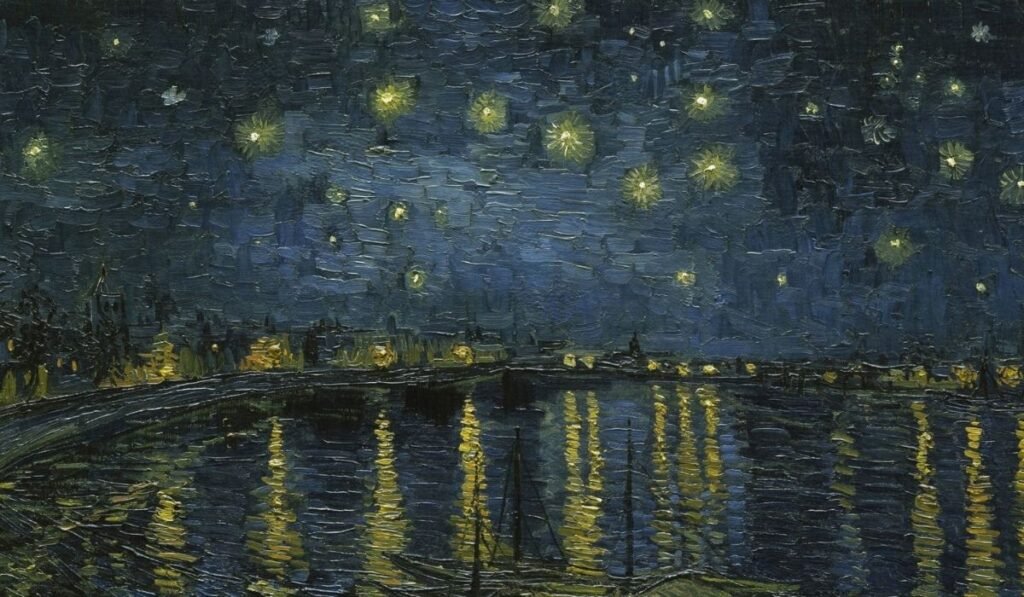
Discovering his true vocation amidst absolute despair, Vincent van Gogh decided to channel his emotional turmoil into visual art. He began teaching himself fundamental drawing techniques, relying heavily on instructional manuals, anatomy books, and sketching pads. His early compositions focused entirely on somber, realistic portrayals of rural peasants, weavers, and landscape studies executed in rough charcoal and dark watercolors. Working tirelessly without formal academic training, Vincent van Gogh viewed these unpolished exercises as necessary foundational steps toward mastering human anatomy, perspective, proportion, and the complex interplay of atmospheric shadow and light.
Studying Under Mentorship in The Hague
Seeking professional guidance to refine his rapidly expanding technical skills, Vincent van Gogh traveled to study under his cousin-in-law, Anton Mauve. Mauve introduced him to the foundational techniques of oil painting and watercolor washes, encouraging him to break away from rigid academic constraints. During this period, Vincent van Gogh produced numerous striking landscape studies, experimenting with textured brushwork and mixed media that incorporated natural elements like sand directly onto damp canvases. Although personal disagreements eventually caused a rift between the two artists, this crucial mentorship gave Vincent van Gogh the vital technical confidence required to pursue larger, more ambitious compositional projects independently.
Mastering Peasant Life Through The Potato Eaters
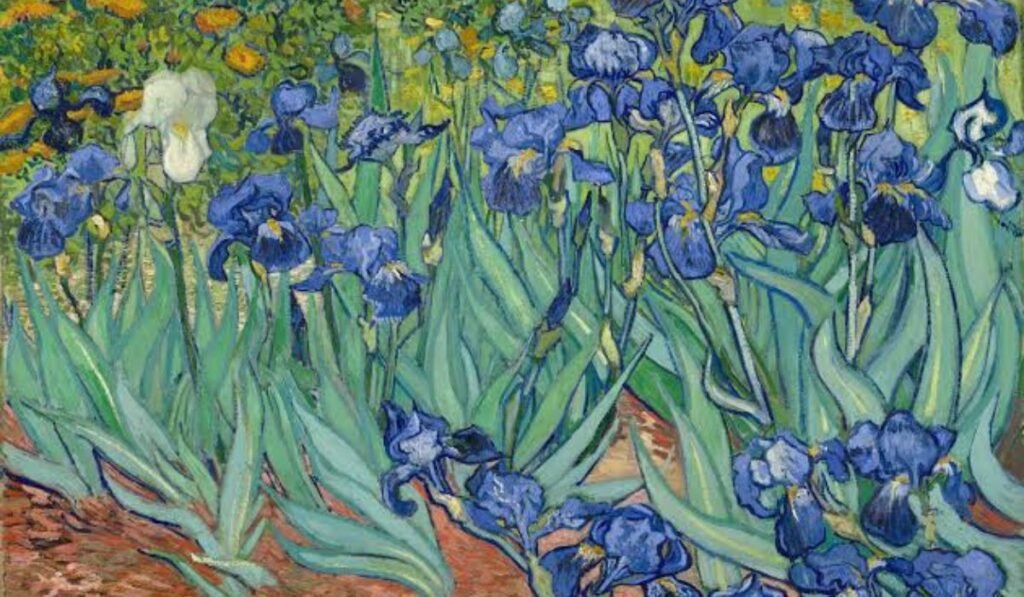
Reaching a major creative milestone during his stay in Nuenen, Vincent van Gogh focused intensely on capturing authentic peasant existence. His exhaustive preparations culminated in his first major masterpiece, The Potato Eaters, which depicted a humble family sharing a meager meal under dim lamplight. He deliberately utilized coarse, earthy color palettes and unidealized facial features to emphasize the honest dignity of hard physical labor. Vincent van Gogh considered this monumental canvas his crowning achievement of the Dutch period, proving to himself that he could successfully translate complex human emotion and sociological critique onto a challenging multi-figure canvas.
Discovering Color Dynamics at the Antwerp Academy
Seeking exposure to classical masters, Vincent van Gogh briefly relocated to Belgium to study at the Antwerp Academy. There, he became deeply enamored with the vibrant color compositions of Peter Paul Rubens and discovered the decorative elegance of traditional Japanese ukiyo-e woodblock prints. His rebellious temperament clashed constantly with the rigid, conservative teaching methods enforced by the academy professors, who rejected his unorthodox color choices and expressive brush techniques. Consequently, Vincent van Gogh abandoned formal institutional instruction after only a few months, choosing instead to move directly to Paris to join his supportive brother, Theo.
Immersing Himself in the Paris Art Scene
Arriving in the French capital introduced Vincent van Gogh to the cutting-edge developments of the contemporary Impressionist and Post-Impressionist movements. Living alongside Theo allowed him to interact directly with legendary visionaries like Claude Monet, Camille Pissarro, Paul Gauguin, and Henri de Toulouse-Lautrec. Under their profound influence, Vincent van Gogh abandoned his muddy Dutch earth tones in favor of bright, luminous palettes, short broken brushstrokes, and high-contrast color pairings. Paris transformed his technical vocabulary entirely, injecting a luminous radiance into his canvases and setting the structural stage for his mature artistic signature to fully emerge.
Relocating to the Radiant Light of Arles
Seeking relief from the exhausting pace of city life and longing for southern sunlight, Vincent van Gogh traveled south to Arles in Provence. This move initiated his most prolific and inventive creative period, during which he produced hundreds of breathtaking paintings capturing the intense yellow wheat fields, blooming orchards, and radiant southern sun. Working at a frantic, obsessive pace, Vincent van Gogh sought to establish an artist cooperative, inviting fellow painters to share a communal creative space. The harsh southern climate and local landscapes inspired iconic masterpieces that defined his legendary status in modern art history.
Creating the Iconic Sunflowers Series in Provence
Decorating the Yellow House in anticipation of Paul Gauguin’s arrival inspired Vincent van Gogh to paint his famous series of sunflower arrangements. Using thick impasto applications and limited tonal variations of yellow and ochre, these vibrant floral studies explored the expressive potential of a single color spectrum. Vincent van Gogh infused these seemingly simple compositions with intense emotional resonance, viewing them as symbols of gratitude, friendship, and enduring warmth. Today, these legendary canvases remain among the most widely recognized and celebrated works by Vincent van Gogh, symbolizing his innovative approach to decorative fine art and creative vision.
Battling Inner Demons and Mental Health Struggles
Beneath the dazzling brilliance of his artistic output, Vincent van Gogh suffered from increasingly severe psychological breakdowns, epileptic episodes, and debilitating anxiety. Isolated living conditions and intense physical exhaustion frequently triggered erratic behavior, culminating in a notorious altercation with Paul Gauguin during which Vincent van Gogh mutilated his own ear. This tragic incident shocked local residents and forced him to confront the terrifying reality of his mental instability. Despite enduring agonizing psychiatric episodes, Vincent van Gogh maintained remarkable clarity during lucid intervals, channeling his psychological suffering directly into his ongoing artistic production.
Voluntary Hospitalization at Saint-Rémy-de-Provence
Admitting himself into the asylum of Saint-Paul-de-Mausole in Saint-Rémy-de-Provence marked another chapter of intense creative productivity for Vincent van Gogh. Confined within the asylum grounds, he painted the surrounding olive groves, walled wheat fields, and dramatic cypress trees with swirling, energetic brush patterns. The controlled environment provided temporary stability, allowing Vincent van Gogh to focus entirely on his craft without external societal pressures. During this confinement, he produced approximately one hundred and fifty paintings, demonstrating extraordinary resilience and proving that his creative genius could flourish even under severe psychological distress and institutional constraints.
Painting The Starry Night From Asylum View
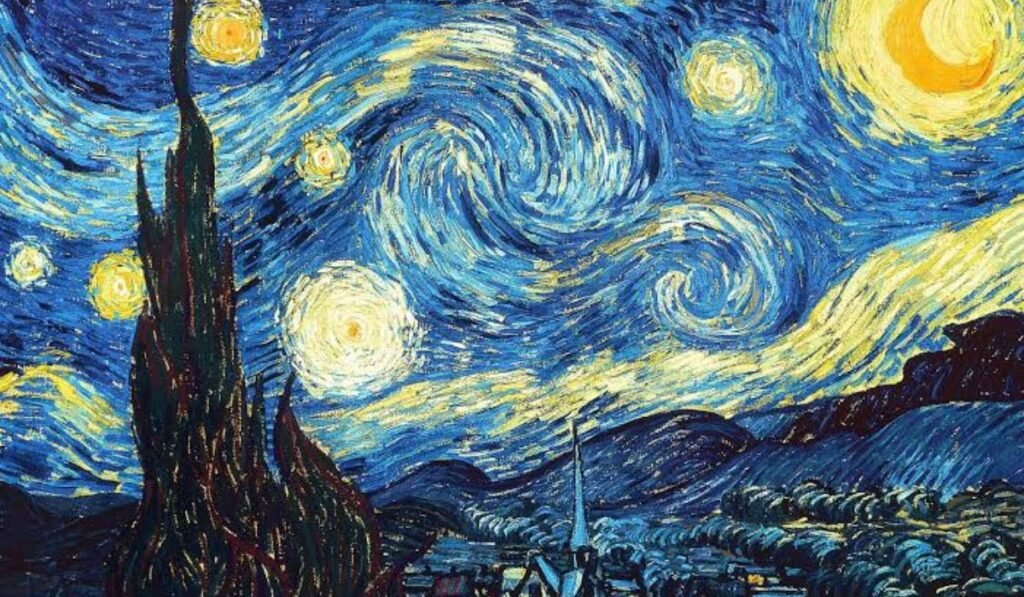
Gazing out from his barred asylum window just before dawn, Vincent van Gogh captured the swirling cosmic energy of the night sky in his signature masterpiece, The Starry Night. Combining direct observation with imaginative expression, the canvas features dramatic whorls of cobalt blue, glowing crescents of yellow, and a looming cypress tree bridging earth and sky. Although Vincent van Gogh occasionally dismissed the painting as an unsuccessful experiment, posterity regards it as the pinnacle of Post-Impressionist achievement. The turbulent brushwork reflects his inner emotional turbulence, immortalizing his unique vision of the universe through an unforgettable visual language.
Moving Northward to Auvers-sur-Oise
Leaving the asylum behind in May 1890, Vincent van Gogh relocated closer to Paris to settle in the quiet village of Auvers-sur-Oise. Under the medical supervision of Dr. Paul Gachet, a homeopathic physician and patron of the arts, Vincent van Gogh experienced a brief period of renewed creative focus and relative calm. He painted feverishly during these final weeks, producing numerous striking portraits, village streetscapes, and sweeping rural vistas of surrounding wheat fields. This peaceful interlude offered a final burst of productivity before mounting financial worries and a deep sense of personal isolation began to overwhelm him once again.
Tragic Final Days and Untimely Death
Succumbing to mounting despair regarding his future and his heavy financial reliance on his brother Theo, Vincent van Gogh suffered a final, fatal downward spiral. On July 27, 1890, he sustained a self-inflicted gunshot wound to the chest in a local wheat field. He managed to stagger back to his inn, where he passed away two days later in the arms of his devoted brother Theo, famously uttering that “the sadness will last forever.” The sudden death of Vincent van Gogh ended his brief decade-long painting career, plunging his family into profound grief while leaving behind an unprecedented collection of revolutionary masterworks.
Posthumous Recognition and Global Legacy
Achieving virtually no commercial success or public fame during his lifetime, Vincent van Gogh sold only a single painting while alive. Following his tragic passing, his devoted sister-in-law, Jo van Gogh-Bonger, tirelessly promoted his extensive correspondence and preserved his unsold canvases. Her dedicated efforts sparked an international rediscovery of his art, ensuring that Vincent van Gogh rapidly gained posthumous acclaim across Europe. By the mid-twentieth century, his revolutionary visual style was universally recognized as foundational to modern art, cementing his status as a legendary cultural icon worldwide.
Establishment of the World-Renowned Van Gogh Museum
Preserving the massive collection of artwork and letters for future generations, the official Van Gogh Museum officially opened its doors in Amsterdam in 1973. This cultural institution houses the world’s largest collection of paintings, drawings, and personal letters created by Vincent van Gogh. Scholars, art historians, and millions of international visitors flock to the museum annually to study his evolving techniques, read correspondence with Theo, and trace his dramatic creative evolution. The museum stands as a permanent tribute to Vincent van Gogh, ensuring his genius remains accessible, protected, and celebrated globally for centuries to come.
Influence on Modern Expressionism and Art History
Spanning generations, the profound impact of Vincent van Gogh on twentieth-century art movements—particularly German Expressionism and Fauvism—remains immeasurable. Painters were deeply inspired by his fearless use of non-naturalistic color, thick impasto textures, and emotionally charged brushwork that prioritized subjective feeling over literal replication. Vincent van Gogh demonstrated that art could serve as a direct conduit for raw human emotion, liberating subsequent generations of creators to experiment freely. His enduring influence echoes through contemporary galleries, digital exhibitions, and pop culture, proving that Vincent van Gogh permanently altered the visual language of humanity.
Commercial Value and Record-Breaking Auction Sales
Transcending his lifelong struggle with poverty, masterpieces by Vincent van Gogh now command some of the highest financial valuations in global art market history. Canvases that failed to attract buyers during his lifetime regularly sell at prestigious international auction houses for hundreds of millions of dollars. This staggering financial appreciation reflects the universal prestige associated with Vincent van Gogh and his enduring cultural footprint. Collectors, institutions, and connoisseurs fiercely compete for any available work, ensuring that the legacy of Vincent van Gogh remains as economically powerful as it is emotionally and historically profound.
Permanent Cultural Impact and Popular Culture
Bridging the gap between fine art and mainstream popular culture, Vincent van Gogh remains one of the most recognizable figures in human history. His distinctive portrait, turbulent life story, and iconic imagery have inspired countless biographical films, bestselling novels, tribute songs, and immersive digital art experiences worldwide. Public fascination with Vincent van Gogh extends far beyond traditional museum walls, capturing the imagination of global audiences across diverse demographics. Ultimately, the timeless appeal of Vincent van Gogh lies in his raw authenticity, inspiring modern society to embrace creative expression and emotional honesty despite life’s overwhelming adversities.
FAQs
- When was Vincent van Gogh born?
- Vincent van Gogh was born on March 30, 1853, in Zundert, Netherlands.
- How many paintings did he sell during his lifetime?
- Vincent van Gogh famously sold only one painting, The Red Vineyard, during his entire lifetime.
- What caused the death of Vincent van Gogh?
- He died from complications following a self-inflicted gunshot wound to the chest in July 1890.
- Where are most of his famous artworks housed today?
- The largest collection of his works is preserved at the Van Gogh Museum in Amsterdam.
- Which art movement is associated with Vincent van Gogh?
- He is globally recognized as one of the preeminent figures of Post-Impressionism.